By

August 21, 2026
Can a UK Company Have a EUR IBAN?
Yes, a UK company can have a EUR IBAN. A company registered in the United Kingdom does not necessarily have to rely only on GBP account details. Depending on the financial provider and its eligibility requirements, a UK business may be able to obtain an account with EUR payment details for receiving and sending euro payments.
A EUR IBAN can be particularly useful for UK companies that trade with customers or suppliers in Europe, receive regular payments in euros or want to avoid converting every incoming EUR payment immediately into GBP.
An IBAN (International Bank Account Number) is a standardized account identifier used to send and receive payments.
A EUR IBAN generally refers to an IBAN attached to an account that supports euro payments.
The IBAN itself includes a country code, such as:
Importantly, a EUR account does not necessarily have an IBAN beginning with a specific country's code. The IBAN country depends on the institution and account structure providing the payment details.
Yes. A UK limited company may be eligible for a EUR-denominated business account, even though the company is incorporated in the UK.
Availability depends on factors such as:
Companies conducting legitimate international business may therefore be able to access EUR payment facilities without establishing a company in the European Union.
Not necessarily.
A UK company does not automatically need to establish a separate EU company simply because it wants to receive payments in euros.
Some banks and regulated payment institutions accept UK companies and can provide suitable EUR account details.
However, eligibility varies considerably between providers. A company should confirm whether its country of incorporation, ownership structure and business activities are supported before applying.
A EUR IBAN can be valuable when a UK company regularly conducts business in euros.
For example, your company may:
Having suitable EUR account details can simplify these transactions.
Yes.
A UK company can receive payments in euros if its bank or payment provider supports incoming EUR transactions.
For example, a UK business could invoice a European customer for €10,000 and provide its EUR payment details on the invoice.
The customer pays in EUR, and the funds are credited according to the account arrangement.
The company can then potentially keep the funds in EUR, convert them into another currency or use them to make further euro payments, depending on the services available.
Potentially, yes.
The Single Euro Payments Area (SEPA) facilitates standardized euro payments between participating countries and institutions.
Although the UK is no longer a member of the European Union, it remains within SEPA's geographical scope.
Whether a particular UK company's account can receive or send SEPA payments depends on the financial institution and account product being used.
Businesses expecting regular euro transfers should therefore confirm that their account supports the required SEPA payment services.
No.
If your business account allows you to maintain a EUR balance, you may be able to receive and retain euros without immediately converting them into pounds.
This can be particularly useful if your business has both EUR income and EUR expenses.
For example:
Receive €20,000 from customers → Keep funds in EUR → Pay €12,000 to European suppliers
The company may only need to convert the remaining funds if it requires another currency.
This can potentially reduce unnecessary currency conversions.
Yes, depending on the provider.
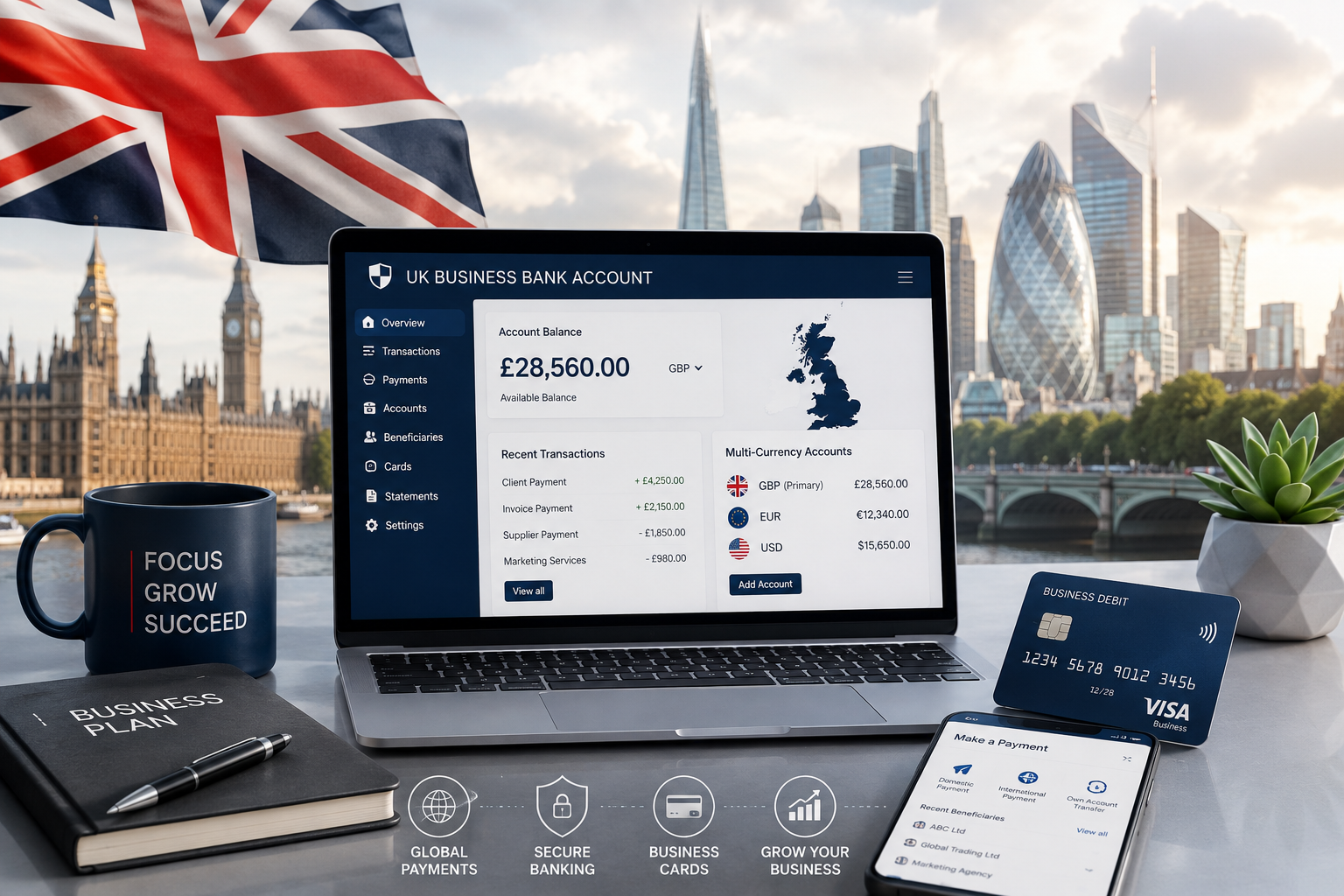
A multicurrency business account can allow a UK company to manage several currencies through one platform.
For example, a company might have access to:
GBP — for UK customers and expenses
EUR — for European customers and suppliers
USD — for international or US transactions
This can be useful for businesses operating across several international markets.
Yes, if the account or payment provider offers foreign exchange services.
A UK company receiving EUR payments could convert those funds into GBP when required.
For example:
Receive EUR → Convert EUR to GBP → Make GBP payments
Alternatively:
Receive EUR → Keep EUR → Pay EUR suppliers
The best approach depends on the company's expenses, cash-flow requirements and currency exposure.
Exchange rates and conversion fees should always be considered when comparing business account providers.
Potentially, yes.
With a suitable multicurrency account, a company may be able to convert funds directly between supported currencies.
For example:
Receive EUR → Convert EUR to USD → Pay a US supplier
This can be particularly useful for international businesses receiving revenue in Europe while purchasing goods or services in other markets.
Potentially.
Some regulated payment providers offer Virtual IBANs (vIBANs) to eligible businesses.
A virtual IBAN can provide unique payment details that help identify and route incoming payments to an underlying account or payment infrastructure.
Virtual IBANs can be useful for businesses that need to separate payments by:
However, a virtual IBAN is not necessarily the same as a separate traditional bank account, so businesses should understand the underlying account structure.
It can be.
A UK e-commerce company selling to European customers may receive substantial revenue in euros.
Access to EUR payment details can help the company manage these funds separately from its GBP transactions.
It may also be useful when paying European manufacturers, wholesalers, logistics companies or other suppliers.
Potentially, yes.
A company does not necessarily need years of trading history before applying for EUR payment facilities.
However, a newly incorporated business may be asked to provide additional information explaining its intended activities.
This could include:
Providing clear information about the company's intended payment activity can help the provider understand the business.
Potentially.
A UK company's eligibility for a EUR account does not depend solely on where the company is incorporated.
Providers may also consider where its directors, shareholders and ultimate beneficial owners live.
A UK company owned by non-UK residents may therefore be eligible, but the available options can depend on the countries involved and the provider's compliance policies.
Requirements vary, but a UK company applying for a EUR business account may be asked for:
Additional documentation may be required depending on the company's structure and activities.
The IBAN itself is only one consideration.
A business should also check whether the account provides the services it actually needs, including:
Companies processing significant international payments should also compare transaction limits and fees.
A EUR IBAN can be sufficient for a business that mainly receives and pays euros.
However, a company operating internationally may benefit from a multicurrency business account.
Instead of managing only EUR, the company may be able to collect, convert and pay in several currencies.
For example:
Customer pays EUR → Company receives EUR → Converts to GBP → Pays UK expenses
or:
Customer pays EUR → Company receives EUR → Converts to USD → Pays US supplier
This can provide greater flexibility for businesses operating across multiple countries.
Yes. There is no general rule preventing a UK company from having EUR payment details, subject to the eligibility requirements of the financial institution providing them.
Not necessarily. Requirements vary between providers, and some financial institutions accept UK-registered businesses without requiring an EU establishment.
Yes, where its account provider supports the relevant SEPA services. The UK remains within SEPA's geographical scope.
Yes, if your business account supports maintaining a EUR balance.
Yes, depending on the provider. Multicurrency business accounts may provide payment capabilities for GBP, EUR, USD and other supported currencies.
Potentially. Approval depends on the provider's supported jurisdictions, ownership requirements, business activity and compliance assessment.
A UK company can have a EUR IBAN, and it can be particularly useful for businesses trading with customers and suppliers across Europe.
Instead of receiving euros and automatically converting every payment into pounds, a suitable account may allow a company to receive EUR, manage the funds in euros, convert EUR to GBP or other supported currencies, and make international business payments.
For UK companies operating internationally, combining EUR payment details with GBP and USD capabilities, SEPA payments and currency conversion can provide a more flexible way to manage cross-border business finances.