By

August 16, 2026
How Do I Open a UK Business Bank Account?
Opening a UK business bank account is one of the first steps after registering a limited company. A dedicated account allows you to separate business and personal finances, receive customer payments, pay suppliers and keep accurate financial records. Most account applications can now be completed online, although some providers may require additional verification.
Before applying, compare different types of business accounts and consider:
The right account depends on how your business operates and whether you trade only in the UK or internationally.
Most account providers will ask for:
Some providers may also request information about expected turnover, tax registration and the source of company funds.
Most applications require you to provide:
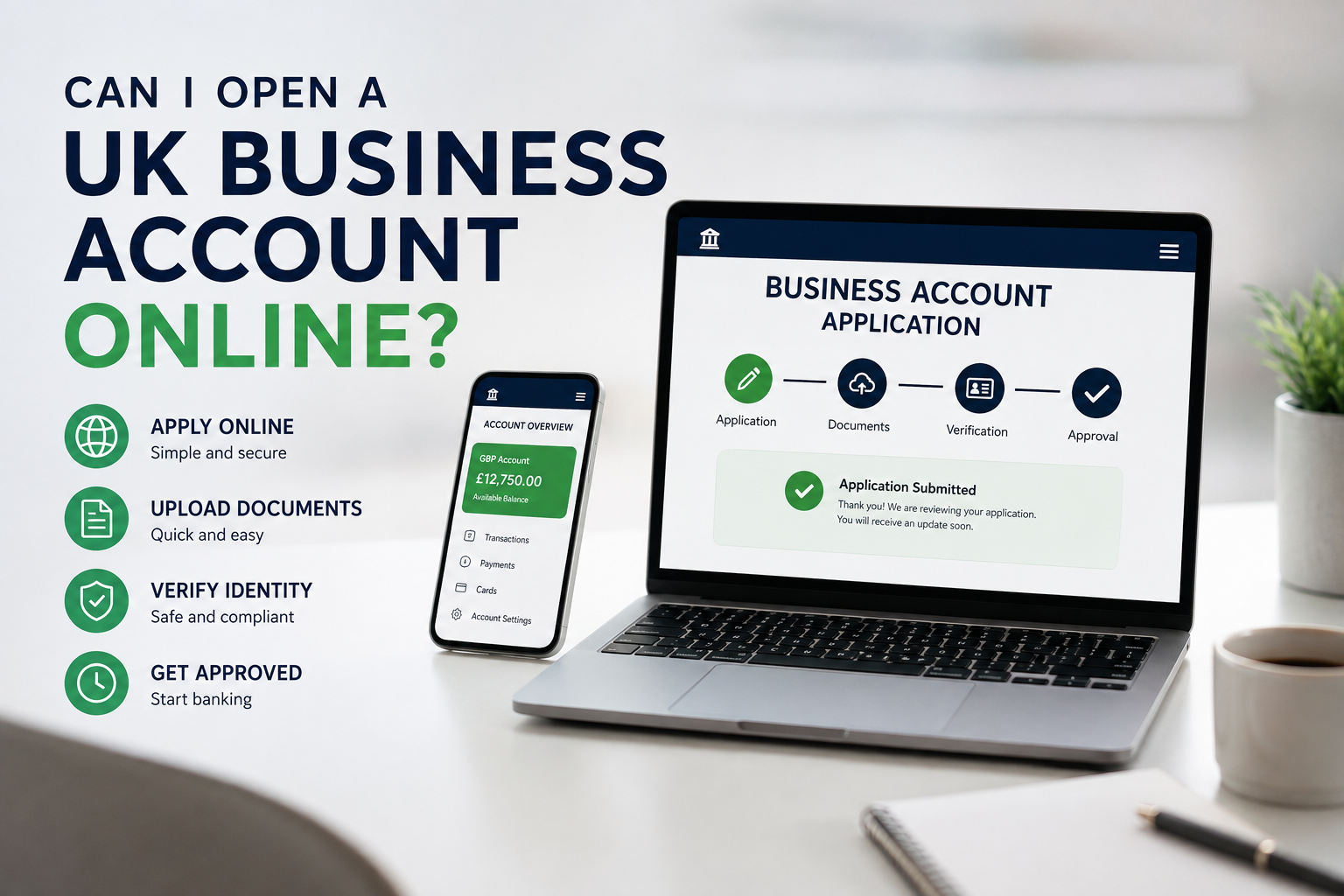
Many digital providers allow applications to be completed within minutes, while traditional banks may require additional checks or appointments.
Financial institutions must verify the identity of directors and business owners before opening an account.
This process may include:
Additional checks may be required for international businesses or non-UK residents.
Once your application is approved, you can begin using your account to:
Some accounts are activated on the same day, while others can take several weeks, depending on the complexity of the application. Overseas applications may take longer.
Yes. Non-UK residents can open UK business accounts, but additional documentation is often required. Some providers may ask for a UK business plan, proof of company registration and identification for all directors and shareholders. The approval process may also take longer because of additional compliance checks.
Opening a UK business bank account is usually a straightforward process when you have the required documents ready. Choosing an account that matches your business needs can help you manage payments more efficiently, keep accurate records and support future growth.