By

August 21, 2026
Can a UK E-Commerce Company Open a Multicurrency Business Account?
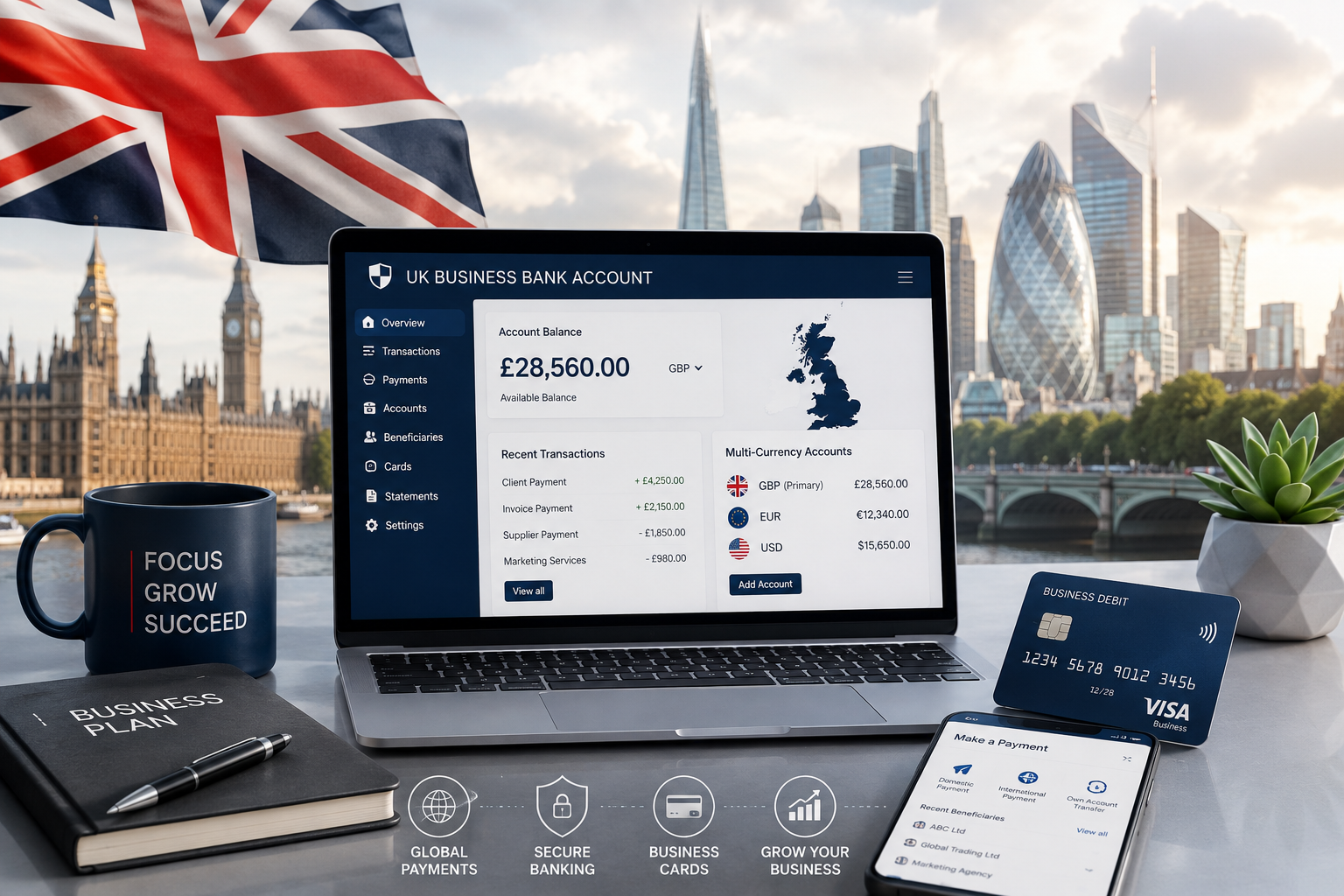
Yes. A UK e-commerce company may be able to open a multicurrency business account that supports currencies such as GBP, EUR and USD, subject to the financial provider’s eligibility, business-sector and compliance requirements.
For an e-commerce company selling internationally, a multicurrency account can be particularly useful because it allows the business to manage sales revenue, marketplace payouts, supplier payments and currency conversion across different markets.
UK limited companies should keep company banking separate from the personal banking of their directors and owners. GOV.UK specifically states that there must be a clear division between company and personal finances.
A multicurrency business account allows a company to manage more than one currency through the same provider or platform.
Depending on the account, a UK e-commerce company might have access to:
The exact currencies and payment features vary between providers.
E-commerce businesses often have customers and suppliers in different countries.
For example, a UK online retailer might:
Receive GBP from UK customers.
Receive EUR from European customers.
Receive USD from international customers or marketplaces.
At the same time, the company might pay suppliers in Europe, the United States or Asia.
A multicurrency account can make these international payment flows easier to manage.
Consider a UK e-commerce company selling products internationally.
Its payment flow might look like:
UK sales → GBP balance
European sales → EUR balance
US sales → USD balance
The company can then potentially use those currencies for corresponding business expenses.
For example:
Receive EUR → Keep EUR → Pay European supplier
or:
Receive USD → Keep USD → Pay supplier in USD
Alternatively:
Receive EUR → Convert EUR to GBP → Pay UK expenses
The available options depend on the provider.
Potentially, yes.
Many international business payment solutions are designed to help companies manage multiple currencies.
For an e-commerce company, three of the most commonly useful currencies are:
GBP — UK sales and expenses
EUR — European sales and suppliers
USD — US sales and international suppliers
You should check whether the provider actually allows the company to maintain separate currency balances rather than simply accepting foreign payments and automatically converting them.
Yes, provided the account offers GBP payment capabilities.
A UK e-commerce company may use GBP for:
For businesses primarily trading in the UK, GBP may remain the company's main operating currency.
Potentially.
If your company sells to customers in Europe, EUR capabilities can be valuable.
For example:
European sales → EUR account → European supplier
Instead of converting EUR revenue immediately into GBP, the company may be able to retain EUR and use it for EUR-denominated expenses.
This can reduce unnecessary currency conversion.
Potentially.
Some multicurrency business account providers offer eligible UK companies an IBAN for EUR payments.
This can be useful for receiving euro-denominated bank transfers.
If European payments are important to your e-commerce company, check whether the account also supports:
Having an IBAN does not necessarily mean every one of these features is included.
Potentially.
USD capabilities can be particularly useful for e-commerce businesses selling internationally.
For example:
Receive USD → Maintain USD → Pay USD supplier
This can be more efficient than:
Receive USD → Convert to GBP → Convert GBP back to USD → Pay supplier
Avoiding unnecessary conversions can help reduce foreign exchange costs.
Depending on the provider, yes.
A multicurrency business account may allow conversions such as:
GBP → EUR
GBP → USD
EUR → GBP
USD → GBP
EUR → USD
This can be useful when the currency received from customers differs from the currency required to pay suppliers.
Currency conversion costs can become significant as an online business grows.
Suppose your e-commerce company converts the equivalent of £500,000 per year.
A difference of just 0.5% in the effective currency conversion cost would represent:
£2,500 per year.
At £1 million of annual conversions, the same difference would represent £5,000.
For international e-commerce businesses, it therefore makes sense to compare the overall FX cost rather than looking only at the monthly account fee.
Potentially.
Marketplace sellers may be able to nominate eligible business account details for receiving their sales proceeds.
However, each marketplace establishes its own payout and verification rules.
Before opening an account specifically for marketplace settlements, check:
Marketplace rules and financial-provider rules are separate.
Potentially.
A typical online-store payment flow might be:
Customer → Online checkout → Payment processor → Multicurrency business account
If the payment processor supports settlement in several currencies, the company may be able to receive different settlement currencies into corresponding account details.
Compatibility should always be checked with both the payment processor and account provider.
Potentially.
An e-commerce company operating several websites or brands may want to centralise its finances through one business account.
For example:
Online Store A → GBP
Online Store B → EUR
Marketplace Sales → USD
All three revenue streams could potentially be managed through the same multicurrency platform.
This can simplify cash-flow management, although the account provider must support the company's structure and transaction profile.
Potentially.
Dropshipping businesses frequently have international payment flows.
For example:
Customer payment → Payment processor → Business account → Overseas supplier
A dropshipping company may therefore benefit from:
However, providers have different policies regarding e-commerce and dropshipping businesses, so eligibility should be checked before applying.
Potentially, provided the account supports the destination, currency and payment method required.
A UK e-commerce company importing or dropshipping products might have a payment flow such as:
Receive GBP → Convert GBP to USD → Pay supplier
or:
Receive USD → Keep USD → Pay supplier in USD
International businesses should check transfer fees, FX rates, supported countries and transaction limits.
Yes, if the account supports the required EUR payments.
For example:
Receive EUR from customers → Pay European supplier in EUR
This can be particularly efficient because no currency conversion may be necessary.
SEPA support can also be important for companies regularly making euro-denominated payments within participating countries.
Potentially.
If the account provides SEPA capabilities, a UK e-commerce company may be able to send and receive eligible EUR payments through the SEPA network.
This can be useful for paying:
Check the provider's specific SEPA capabilities and fees.
Potentially.
Some providers offer Virtual IBANs (vIBANs) to eligible business customers.
Virtual IBANs can be particularly useful for businesses receiving numerous incoming bank transfers because they can help identify different payment streams.
For example, an e-commerce company might potentially use separate virtual IBANs for:
Marketplace A
Marketplace B
Online Store A
Online Store B
This can simplify payment identification and reconciliation.
For an internationally active online business, potential benefits include:
Multiple currencies — Manage GBP, EUR, USD and other supported currencies.
Fewer unnecessary conversions — Use foreign-currency revenue to pay expenses in the same currency where possible.
International supplier payments — Pay manufacturers, wholesalers and other overseas suppliers.
European payments — Access EUR and potentially SEPA payment capabilities.
Currency conversion — Convert funds when the business actually needs another currency.
Centralised cash flow — Manage international revenue through one platform.
Reporting — Keep clearer records of payments and currency conversions.
Business.gov.uk notes that business accounts can help companies track cash flow, maintain accounting records, handle larger transaction volumes and accept customer payments.
Do not choose an account solely because it advertises "multiple currencies."
Check exactly what the account provides.
Important considerations include:
The best option depends on the company's actual payment flows.
Not necessarily, depending on the services required.
Business.gov.uk notes that businesses can choose between traditional banking and newer digital or fintech providers. Digital providers can be particularly suitable for businesses wanting integration with digital payments and APIs, although their range of services may differ from traditional banks.
Therefore, businesses should understand exactly what type of institution provides the account and what protections and services apply.
Potentially.
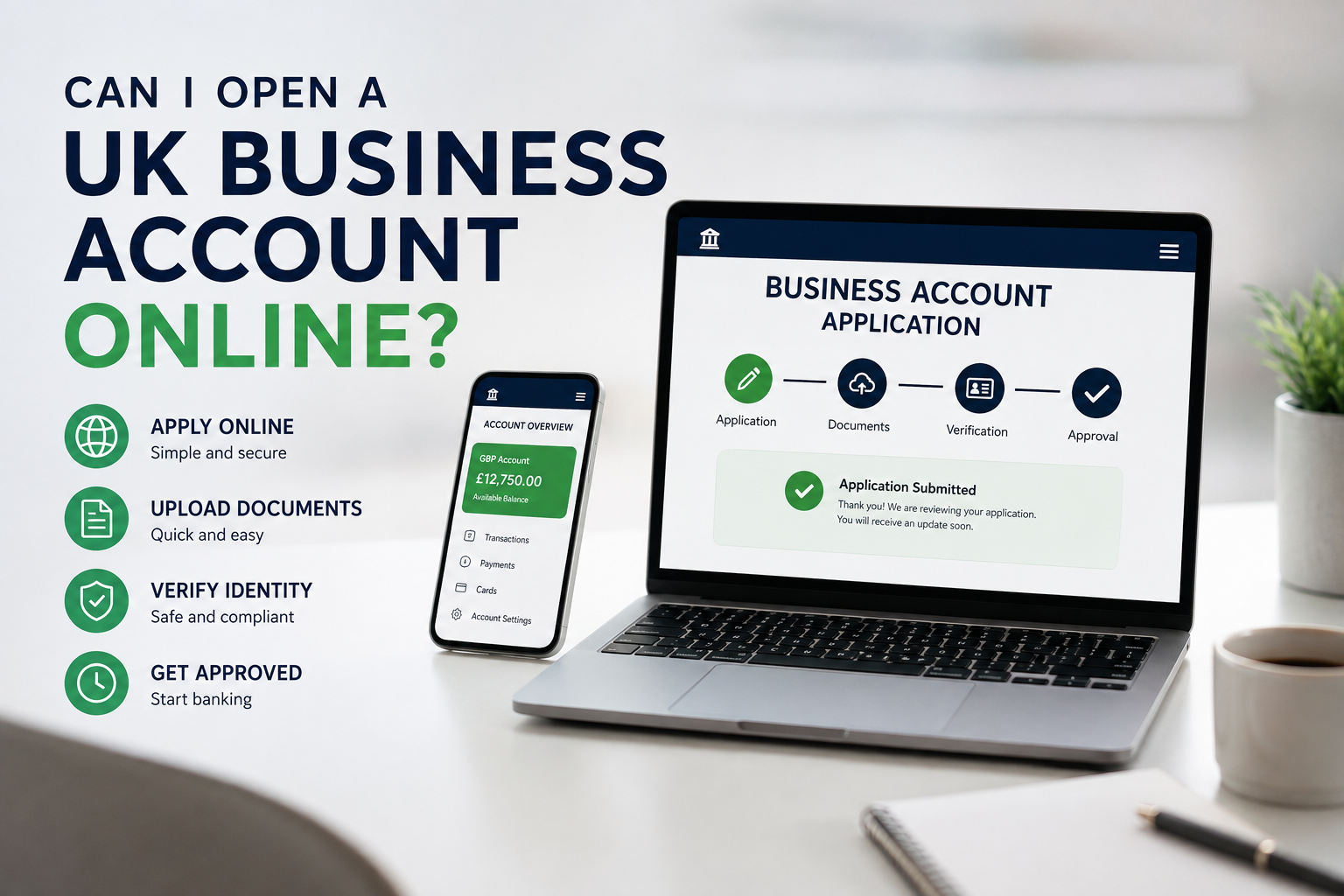
A new company may not have extensive trading history, so the provider may ask for additional information about its intended activities.
You may need to provide:
Business.gov.uk notes that new businesses may need to provide a business plan and information about their main business activities when applying for a business account.
Potentially.
However, residency can affect eligibility.
Business.gov.uk notes that standard UK business bank accounts typically require UK residency, while international businesses can face additional checks on directors, owners and foreign investors.
An overseas director should therefore check whether the provider:
Eligibility should ideally be checked before submitting a full application.
Possible reasons include:
Approval is subject to the provider's eligibility and compliance policies.
Not necessarily.
One advantage of a multicurrency account is that it may reduce the need to open separate accounts simply because the business operates in several currencies.
Instead of maintaining:
GBP account + EUR account + USD account
with different providers, an eligible company may be able to manage several currencies through one platform.
However, some larger e-commerce businesses choose to maintain more than one provider for operational resilience or specialised payment requirements.
Imagine a UK company with:
UK sales: £20,000 per month
European sales: €30,000 per month
UK expenses: £12,000 per month
European supplier costs: €18,000 per month
A multicurrency account could potentially allow the company to:
Receive GBP → Pay GBP expenses
and:
Receive EUR → Pay EUR supplier
Only the remaining funds would need to be converted if required.
Consider a larger online company with:
Customers: UK, Europe and US
Revenue: GBP, EUR and USD
Suppliers: UK, Europe and Asia
The company might benefit from a payment setup supporting:
GBP + EUR + USD + IBAN + SEPA + international payments + FX
This can provide considerably more flexibility than operating solely through a GBP business account.
Yes, potentially. Eligibility depends on the provider, business model, directors, ownership structure and countries involved.
Potentially. Some multicurrency business accounts allow eligible companies to manage all three currencies.
Potentially. Check whether the provider offers a genuine EUR balance rather than automatically converting incoming EUR.
Potentially. If the account supports both maintaining and sending USD, this may avoid an unnecessary currency conversion.
Potentially. Some providers offer eligible UK companies EUR IBAN details.
Potentially, provided the marketplace accepts the account details and the financial provider supports the activity.
Potentially. The provider may request a website, supplier information, business plan, expected turnover and source-of-funds information.
Potentially, but the provider must accept directors from the relevant country of residence.
Yes, a UK e-commerce company can potentially open a multicurrency business account, and for companies trading internationally it can be particularly useful.
Instead of automatically converting every international payment into GBP, a suitable account may allow the business to receive, manage, convert and pay in GBP, EUR and USD.
For an e-commerce company, the ideal setup should follow the business's actual money flow:
Receive sales → Manage currencies → Convert when necessary → Pay suppliers
When choosing an account, pay particular attention to marketplace and payment-processor compatibility, EUR IBAN availability, SEPA payments, international transfers, currency conversion rates and FX fees.
For a UK limited company, whichever account structure is chosen, company banking should remain separate from directors' personal banking.