By

August 21, 2026
Can an E-Commerce Business Receive Payments in USD, GBP and EUR?
Yes. An e-commerce business can receive payments in USD, GBP and EUR if its business account and payment providers support those currencies.
For a UK e-commerce company selling internationally, a multicurrency business account can be particularly useful. It may allow the business to receive and manage different currencies separately instead of automatically converting every payment into pounds.
UK government guidance specifically notes that larger businesses trading internationally may need accounts in different currencies—for example, where they need to pay suppliers in those regions.
An international e-commerce company might sell to customers in several markets:
UK customers → GBP
European customers → EUR
US customers → USD
Depending on how the business accepts payments, the funds might arrive through:
The money can then be settled into the company's business account.
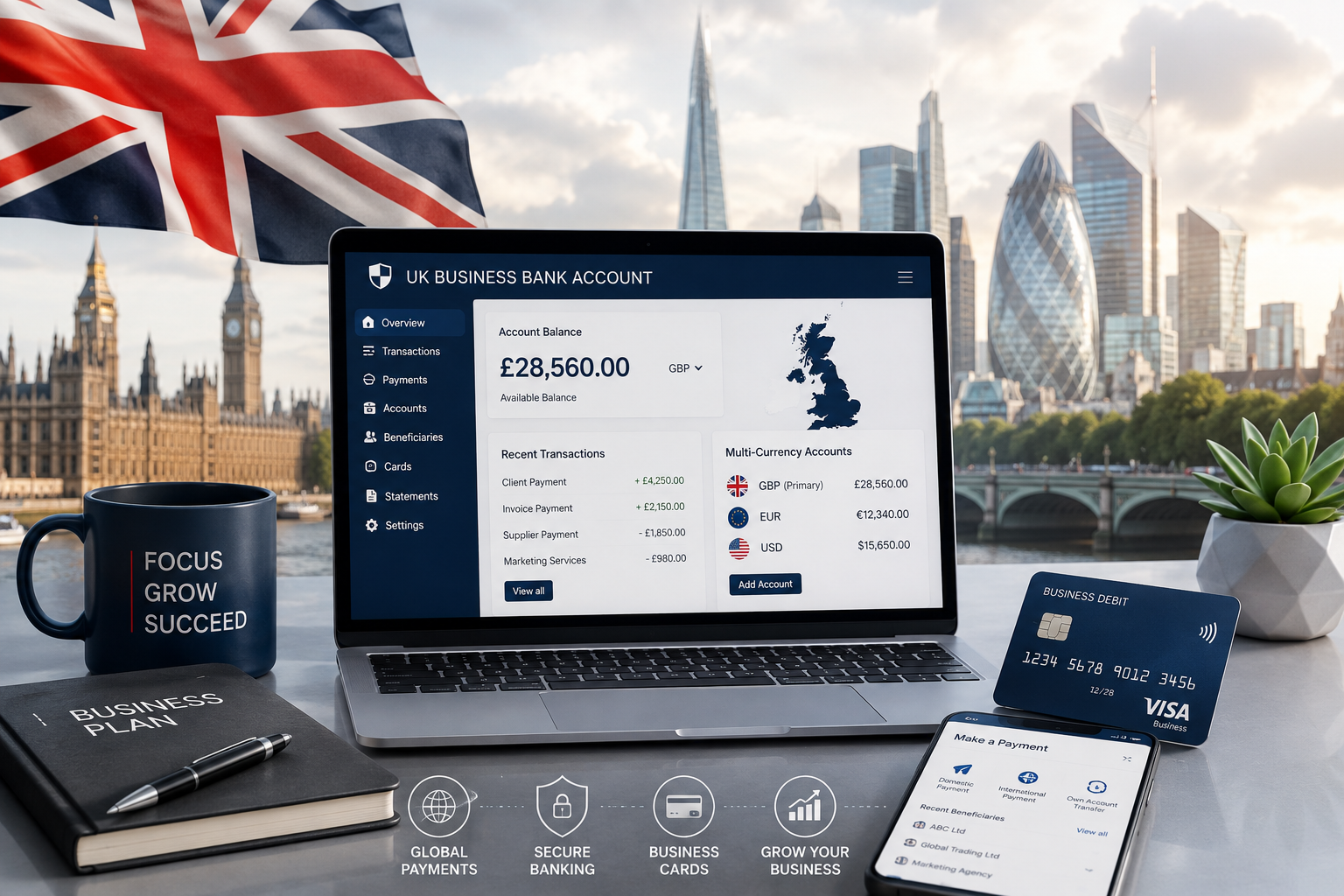
A multicurrency business account allows a company to manage more than one supported currency.
For an e-commerce business, this might include:
GBP — for UK sales and expenses
EUR — for European sales and suppliers
USD — for US sales and international suppliers
Some providers support many additional currencies.
The important distinction is whether the account lets you maintain separate currency balances or simply accepts foreign payments and automatically converts them.
GBP is normally the main operating currency for a UK e-commerce company.
The business might receive GBP from:
The funds can then be used for UK business expenses such as suppliers, shipping, advertising and software.
If an e-commerce company sells to European customers, it may benefit from receiving EUR directly.
For example:
European customer → EUR → Business EUR balance
The company could then potentially:
Keep EUR → Pay European supplier
or:
Convert EUR → GBP
If the business regularly receives euro bank transfers, it may also benefit from having an IBAN and access to SEPA payments.
USD can be particularly important for internationally focused e-commerce businesses.
A company may receive USD from:
If the account supports a USD balance, the company may be able to retain those funds rather than immediately converting them into GBP.
For example:
Receive USD → Keep USD → Pay USD supplier
One of the main advantages is avoiding unnecessary currency conversions.
Imagine an e-commerce business receives $50,000 in USD and needs to pay a supplier $30,000 in USD.
If the incoming funds are automatically converted:
USD → GBP
and the company later pays its supplier:
GBP → USD
the money has been converted twice.
With suitable multicurrency facilities, the business might instead:
Receive $50,000 → Pay $30,000 supplier → Convert remaining $20,000 if required
This can reduce unnecessary FX transactions, although actual savings depend on the provider's exchange rates and fees.
UK government export guidance specifically recommends considering whether a business needs to keep payments in different currencies and notes that larger businesses may benefit from doing so when paying regional suppliers.
Potentially, yes.
Providing customers with familiar currencies can also improve the buying experience.
UK government e-commerce guidance notes that customers in different markets are likely to want to pay using their local currency and recommends adapting payment methods to the markets where the business sells.
For example, an online store could display:
United Kingdom → £ GBP
Europe → € EUR
United States → $ USD
However, displaying prices in a currency does not necessarily mean your business receives settlement in that same currency.
Your payment processor's settlement arrangements determine what actually reaches your business account.
This is an important distinction.
Suppose a US customer buys a product for $100.
Your website displays USD and the customer pays $100.
But your payment processor might:
Customer pays $100 → Processor converts USD to GBP → Business receives GBP
Alternatively, if the processor and your business account support USD settlement:
Customer pays $100 → Processor settles USD → Business receives USD
The second option can be useful if your company also has expenses in USD.
Potentially.
Marketplace sellers may receive sales proceeds in different currencies depending on the marketplace, seller account, market and payout arrangements.
For example:
UK marketplace sales → GBP
European marketplace sales → EUR
US marketplace sales → USD
You should check the marketplace's payout requirements before opening an account specifically for this purpose.
The marketplace must accept the account details you intend to use.
Potentially.
Some payment arrangements allow businesses to settle sales proceeds in different currencies.
For example:
GBP sales → GBP balance
EUR sales → EUR balance
USD sales → USD balance
However, this depends on both your payment processor and your business account.
You should check:
Potentially.
Some business account providers give eligible companies an IBAN for receiving euro payments.
This can be useful for:
If you need a EUR IBAN, also check whether the account supports SEPA transfers.
Potentially.
Some multicurrency business accounts provide payment details that allow eligible companies to receive USD transfers.
The exact payment method can vary.
Check whether the account supports:
Receiving USD is more useful if you can also decide what to do with the currency after it arrives.
Depending on the provider, yes.
A multicurrency business account may allow conversions such as:
USD → GBP
EUR → GBP
GBP → EUR
GBP → USD
USD → EUR
EUR → USD
Foreign exchange costs should be compared carefully because they can become significant for high-volume e-commerce companies.
Government export guidance notes that exchange rates can affect businesses trading internationally and specifically identifies dollars and euros as common foreign invoicing currencies.
Potentially, and this can be one of the main advantages of multicurrency banking.
For example:
Receive GBP → Pay UK supplier in GBP
Receive EUR → Pay European supplier in EUR
Receive USD → Pay international supplier in USD
This can reduce the need to convert money simply to pay suppliers.
An e-commerce business importing products from China may frequently need to make international supplier payments.
For example:
Receive USD from sales → Pay supplier in USD
or:
Receive GBP → Convert GBP to USD → Pay supplier
The most efficient option depends on the currency requested by the supplier and the fees charged by the business account provider.
Not necessarily.
A multicurrency business account may allow you to manage several currencies through one provider.
Instead of maintaining three completely separate relationships:
GBP account
EUR account
USD account
you might have:
One business platform → GBP + EUR + USD
However, account structures differ between providers, so check exactly how each currency is held and what payment details are provided.
Yes, there is no general rule requiring a UK limited company to conduct all business exclusively in pounds.
UK government export guidance specifically discusses UK businesses invoicing buyers in foreign currencies and identifies dollars and euros as common options.
The company's account and payment infrastructure must, of course, support the relevant currencies.
Not necessarily.
If almost all your customers and suppliers use GBP, a standard GBP business account may be sufficient.
For example:
Sales: 95% GBP
Suppliers: GBP
Expenses: GBP
There may be little reason to maintain several currencies.
But consider another company:
Sales: GBP + EUR + USD
Suppliers: GBP + EUR + USD
Customers: UK + Europe + US
A multicurrency account can be much more useful in this situation.
Imagine a UK online retailer with the following monthly activity:
UK sales: £30,000
European sales: €25,000
US sales: $40,000
The company also has:
UK expenses: £20,000
European supplier: €15,000
International supplier: $25,000
Instead of converting everything into GBP, the company could potentially use:
GBP sales → GBP expenses
EUR sales → EUR supplier
USD sales → USD supplier
Only surplus funds would need to be converted when required.
If your e-commerce business regularly handles USD, GBP and EUR, look beyond the words "multicurrency account."
Check whether the provider offers:
Business.gov.uk recommends choosing payment methods based on factors including where the business sells, cost, speed of access to funds and integration with business systems.
Potentially.
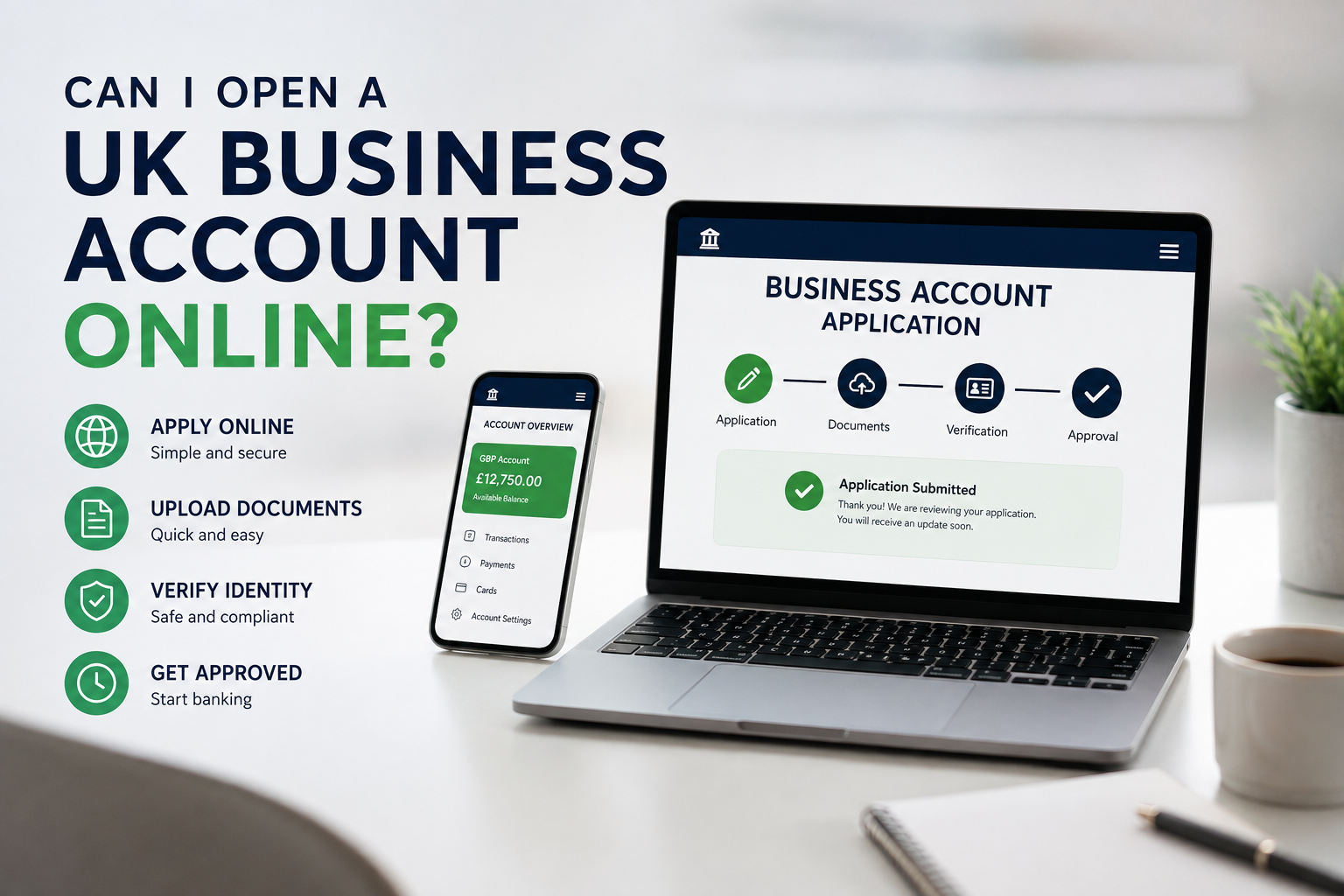
A newly incorporated e-commerce company may be asked to provide:
Business.gov.uk notes that business account providers typically request information about the company's activities, address, financial position and directors when assessing an application.
Potentially.
Some providers accept UK companies with overseas directors, while others impose UK-residency requirements.
International applications can also involve additional checks on directors, owners and foreign investors.
If the company has overseas directors, check eligibility before submitting an application.
Yes, potentially. You need a business account and payment setup that supports those currencies.
Potentially. A multicurrency account may allow separate GBP, EUR and USD balances. Check the provider's exact account structure.
Not necessarily. If your account supports maintaining the foreign currency, you may be able to keep EUR or USD until you decide to convert or spend it.
Potentially. This can avoid an unnecessary currency conversion.
Potentially, if your account supports both incoming and outgoing USD payments.
Not necessarily, but it can be useful if your company regularly receives EUR bank transfers or makes European payments.
It can be, particularly when marketplaces settle funds in several currencies.
Yes, if its account provider offers the required foreign exchange services.
Yes, an e-commerce business can receive payments in USD, GBP and EUR when its payment processor and business account support those currencies.
For a UK e-commerce company selling internationally, a multicurrency setup can allow the business to follow a simple payment flow:
Receive → Keep → Convert → Pay
Rather than automatically converting everything into GBP, the company may be able to receive GBP, EUR and USD separately, use those currencies to pay corresponding expenses, and convert only when necessary.
This can be particularly valuable for e-commerce companies selling across the UK, Europe and the US, especially when they also pay international suppliers.
For a UK limited company, the multicurrency facilities should be held and operated for the company rather than mixed with directors' personal banking; GOV.UK states that company banking must be separate from personal banking.