By

August 21, 2026
Can I Connect a Multicurrency Business Account to My Online Store?
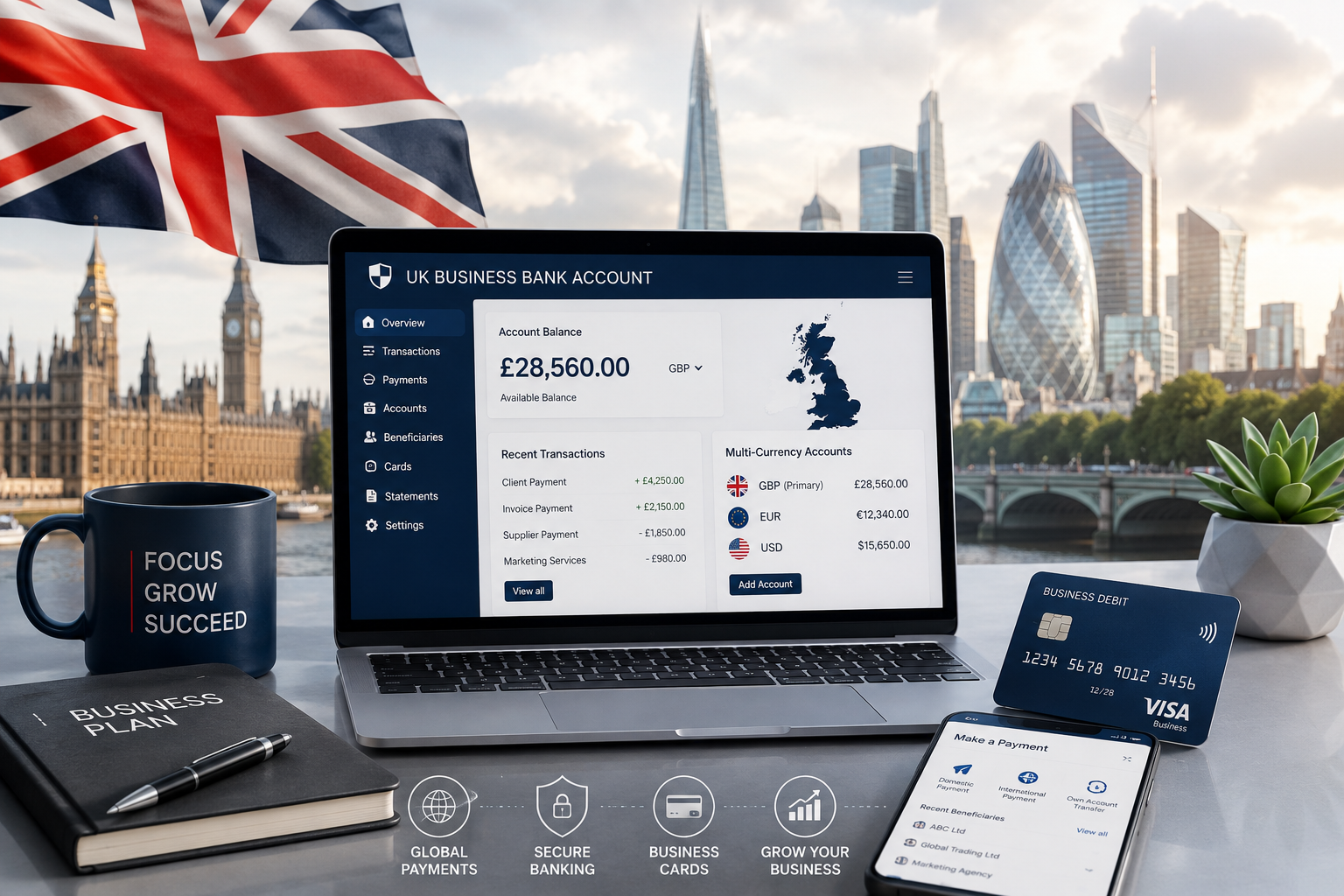
Yes, in many cases you can use a multicurrency business account with an online store. This can allow your e-commerce company to receive settlements in currencies such as GBP, EUR and USD, depending on your store platform, payment processor and business account provider.
For international e-commerce businesses, this can make it easier to receive customer payments, convert currencies and pay overseas suppliers.
Your business account is usually connected to the payment process through your payment processor or marketplace rather than directly to the website itself.
A typical payment flow is:
Customer → Online Store → Payment Processor → Multicurrency Business Account
For example:
UK sales → GBP
European sales → EUR
US sales → USD
Potentially.
If both your payment processor and business account support multiple settlement currencies, you may be able to receive different currencies without automatically converting everything into GBP.
For example:
GBP sales → GBP balance
EUR sales → EUR balance
USD sales → USD balance
This can be particularly useful for businesses selling internationally.
Potentially.
Most e-commerce platforms process customer payments through an integrated or third-party payment processor.
You would normally add your business account details as the account where eligible sales proceeds are settled.
Compatibility depends on:
Always check compatibility before changing your payout details.
Potentially.
If you also sell through online marketplaces, you may be able to use your multicurrency account for marketplace settlements.
For example:
Online Store → Business Account
Marketplace A → Business Account
Marketplace B → Business Account
Each marketplace has its own requirements, so make sure it accepts the account details provided.
Potentially.
If your multicurrency account provides EUR payment details or an IBAN, you may be able to receive eligible EUR payments into your EUR balance.
This can be useful for businesses selling to European customers or receiving European marketplace settlements.
Potentially.
If your account and payment processor support USD settlements, your company may be able to receive USD directly.
For example:
US customer → Pays USD → Payment processor → USD business balance
You could then:
Keep USD → Pay USD supplier
or:
Convert USD → GBP
This gives the business more control over when currencies are converted.
Potentially.
This is one of the main advantages of a multicurrency setup.
For example:
Receive EUR → Pay European supplier in EUR
Receive USD → Pay international supplier in USD
Receive GBP → Pay UK expenses in GBP
Using revenue in the same currency as your expenses can reduce unnecessary currency conversions.
Make sure your payment processor or marketplace supports:
Also make sure the name on the business account matches the legal entity operating the online store where required.
Not necessarily.
If your e-commerce business sells almost entirely in the UK and receives only GBP, a standard GBP business account may be sufficient.
A multicurrency account becomes more useful when your company:
Potentially, provided your payment processor and business account support these settlement currencies.
Potentially, particularly if all stores are operated by the same legal company.
Potentially. An IBAN may be useful for receiving eligible EUR payments or settlements.
Potentially, if your account provides a USD balance and your payment processor supports USD settlements.
Potentially. A multicurrency account may allow you to use the currencies received from customers to pay suppliers.
Yes, a multicurrency business account can potentially be connected to your online store through your payment processor or payout settings.
For an international e-commerce company, this can create a simple payment flow:
Sell internationally → Receive GBP, EUR and USD → Keep or convert currencies → Pay suppliers
Before connecting the account, confirm that your e-commerce platform, payment processor and business account provider are compatible with the currencies and payment methods you intend to use.