By

August 23, 2026
Can My UK Company Pay for Internet Costs?
Yes. A UK limited company can pay for internet costs where the connection is required for business purposes. However, the tax treatment depends on whether the internet contract is in the company's name, whether you work from home and whether the connection also has personal use.
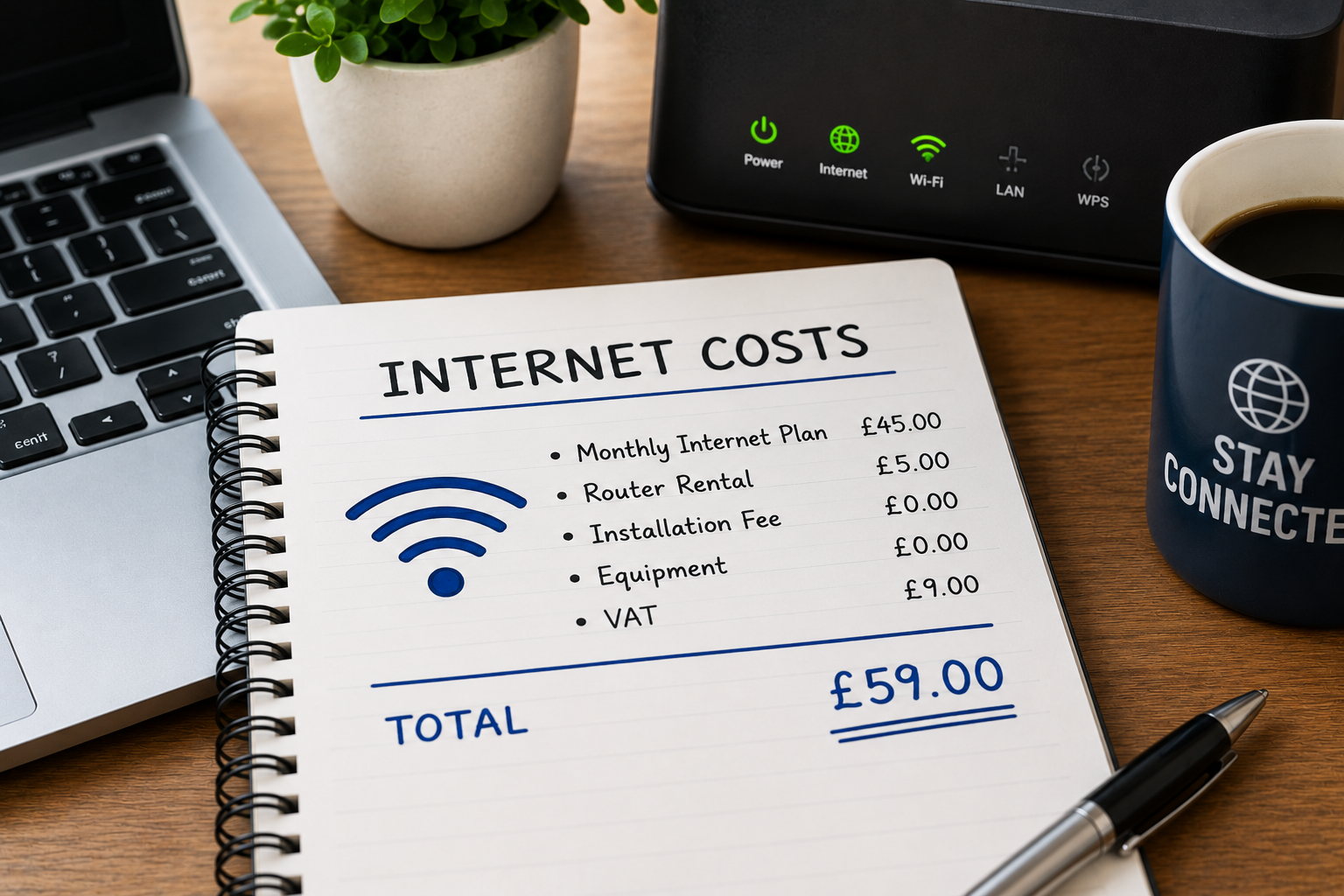
Internet expenses can include broadband, business internet services and certain connectivity costs needed to operate the company.
Yes. If a company requires broadband to operate its business, the cost can generally be paid by the company.
Business internet may be used for:
Where the broadband is installed at dedicated business premises and used for company activities, the position is generally straightforward.
Potentially, but the rules are more complicated when you work from home.
If you already have a personal broadband connection and use it for both private and business purposes, the company cannot necessarily claim the entire household internet bill as a tax-free business expense.
The treatment depends on the arrangement and whether additional costs are incurred because of working from home.
If you already had a personal internet connection and the monthly cost does not increase because of your business use, there may be no additional internet cost for the company to reimburse.
Simply using an existing personal broadband connection for business does not automatically make the entire household bill a company expense.
The position can be clearer if a separate broadband connection is installed specifically for business purposes.
For example, the company might pay for a dedicated business internet connection used for:
Where the connection is genuinely provided for business purposes, the company may be able to claim the qualifying cost.
Where possible, having a dedicated business internet contract in the company's name can make the business purpose and accounting treatment clearer.
The company can pay the supplier directly from its business account and retain the invoices as supporting records.
However, putting a contract in the company name does not automatically make private expenditure tax deductible. The underlying use and purpose still matter.
Qualifying internet expenses can generally reduce the company's taxable profits.
For example, if a company pays £600 a year for a broadband connection that qualifies as an allowable business cost, the £600 may be deductible when calculating taxable profits.
This does not mean the company receives £600 back. Instead, it can reduce the amount of profit on which Corporation Tax is calculated.
If the company is VAT registered, it may be able to reclaim VAT on qualifying business internet expenses.
If the connection has both business and personal use, the amount of VAT that can be reclaimed may need to reflect the business element, depending on the circumstances.
The company should keep valid VAT invoices to support any VAT reclaimed.
Yes. Wi-Fi is generally part of the internet service rather than a separate category of expense.
A company may also potentially pay for qualifying business networking equipment such as:
The tax treatment depends on the type of expenditure and business use.
A company may also pay for connectivity required for business activities, including qualifying:
Different tax rules may apply depending on whether the service is provided directly by the company or reimbursed to a director or employee.
Potentially.
A director working from home may be able to receive reimbursement for certain additional household expenses incurred because of working from home.
However, the company should not automatically pay the director's entire personal broadband bill.
The correct approach depends on whether the internet service is personal, dedicated to the business or creates additional costs because of company work.
The company should keep records supporting any internet expenses it claims, such as:
Clear records can help demonstrate that the expenditure relates to legitimate company activities.
Potentially. If broadband is provided for business purposes, the company may be able to pay or reimburse qualifying costs. Existing personal broadband with no additional business cost may be treated differently.
Yes, but whether the full cost can be claimed depends on the arrangement, business use and whether additional costs arise from working at home.
Qualifying business internet expenses can generally reduce taxable company profits and therefore potentially reduce Corporation Tax.
Yes. A dedicated internet connection required for the company's business can potentially be treated as a company expense.
A VAT-registered company may be able to reclaim VAT relating to qualifying business use, subject to the normal VAT recovery rules.
Potentially. Networking equipment purchased for genuine business use may qualify for tax relief, although equipment can receive different accounting treatment from ordinary monthly internet charges.
A UK limited company can pay for internet costs where they are genuinely incurred for business purposes.
A dedicated business broadband connection is generally easier to identify as a company cost. Where an existing household internet connection is used for both business and personal purposes, the tax treatment can be more restrictive.
Keeping business and personal internet costs clearly separated and maintaining invoices and payment records can help ensure that the company claims only the expenses to which it is entitled.