By

August 22, 2026
Do I Need a Business Bank Account for Shopify in the UK?
f you run a Shopify store in the UK, having a dedicated business bank account can make it much easier to manage your sales, expenses and payments. Whether you actually need one depends largely on how your business is structured.
For a UK limited company, using a separate business account is generally the appropriate way to keep company money separate from your personal finances. If you operate as a sole trader, you may have more flexibility, although a dedicated business account can still make accounting and financial management easier.
Shopify does not generally require every store owner to have a traditional business bank account simply to create and operate a store.
However, the bank account you use for receiving payouts must meet the requirements of the payment provider and payout method available to your business.
If your Shopify store is operated through a UK limited company, using an account in the company's name can also help keep your business transactions organised.
A dedicated business account separates your Shopify activity from your personal finances.
It can make it easier to:
As your Shopify business grows, separating business and personal transactions can become increasingly important.
A UK limited company is a separate legal entity from its directors and shareholders.
Because company funds belong to the company, it is good practice to maintain clear separation between company and personal money. A dedicated business account provides a straightforward way to achieve this.
It can also make bookkeeping easier because transactions relating to Shopify sales, advertising, apps, suppliers and other expenses are kept together.
A sole trader and the individual running the business are not separate legal entities in the same way as a limited company.
This means a sole trader may be able to use a personal account, depending on the bank or payment provider's terms.
However, some personal accounts prohibit or restrict business use. A dedicated business account can therefore be a better long-term solution, particularly as sales volumes increase.
The right account depends on where your customers and suppliers are located.
For a UK-focused Shopify store, a GBP business account may be sufficient.
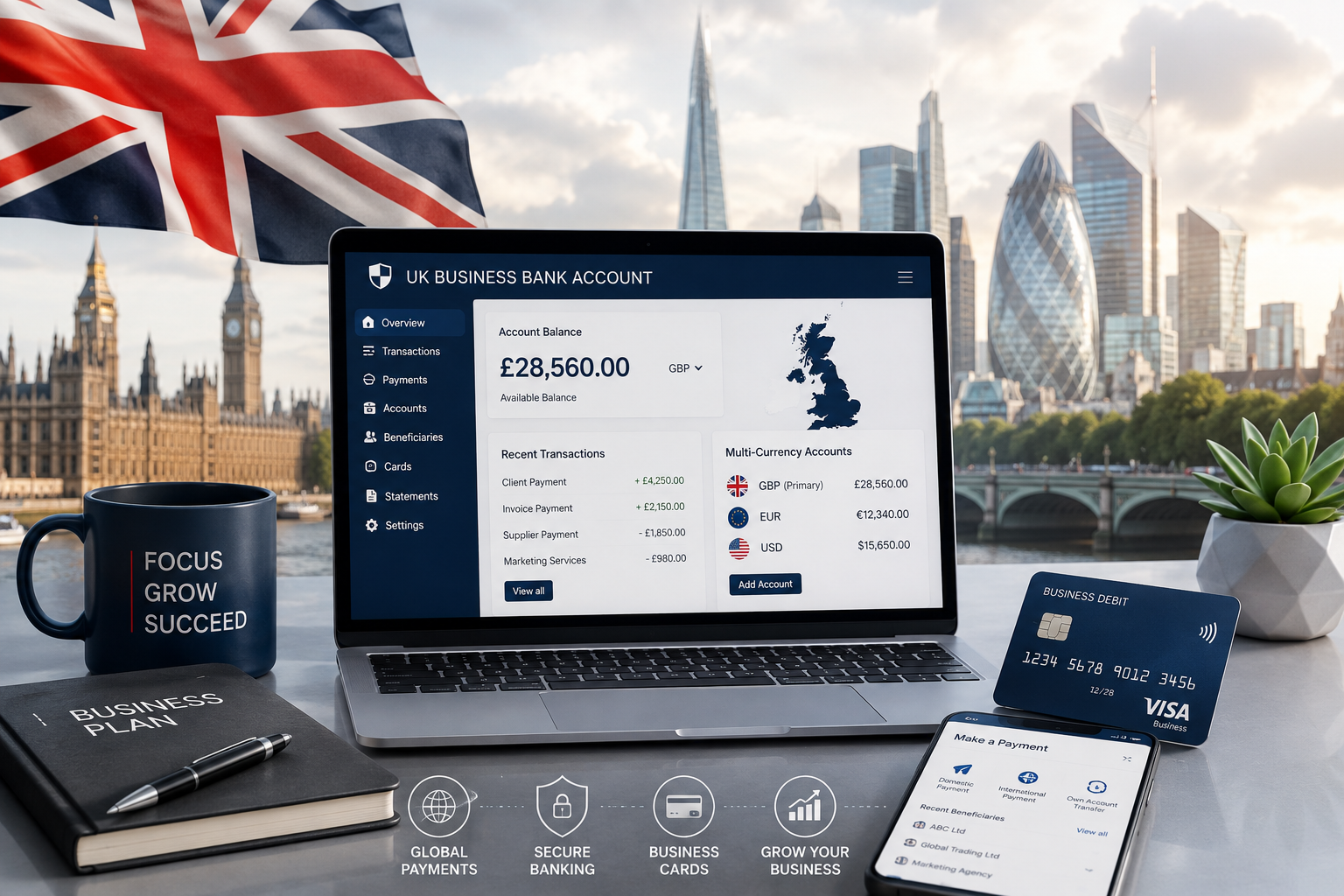
For an international Shopify business, a multicurrency business account may be more useful. It can provide access to currencies such as:
This can be particularly useful when your store sells internationally or works with overseas suppliers.
Potentially, yes, provided the account details and currency are supported by the relevant Shopify payment service and meet its payout requirements.
Before connecting an account, check that the account is eligible to receive the specific currency and payment type you intend to use.
Currency conversion can become a significant consideration for international e-commerce businesses.
For example, a UK Shopify company might sell products to US customers, pay European suppliers in EUR and have operating expenses in GBP.
Access to multiple currencies can help the business manage these different payment flows more efficiently and potentially reduce unnecessary currency conversions.
Potentially. A UK limited company with an overseas director may be able to apply for a business account, although eligibility requirements vary between providers.
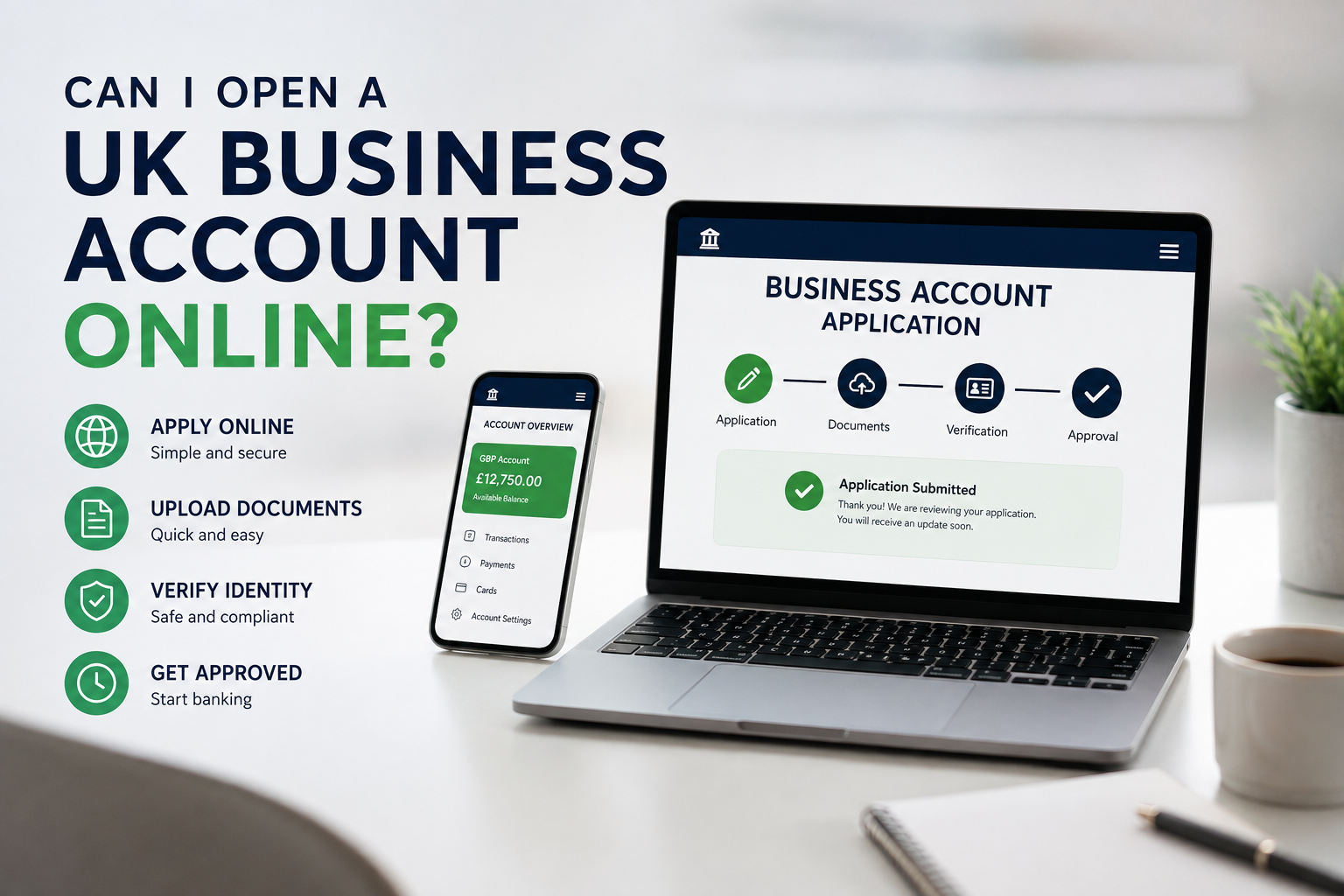
The application process may require information about the company, directors, shareholders, expected transactions and the nature of the Shopify business.
Additional verification may also be required for companies managed from outside the UK.
Requirements vary, but businesses may be asked to provide:
Providing accurate information about how the Shopify business operates can help with the account-opening process.
You do not necessarily need to wait for a business account before building your Shopify store.
However, arranging your business banking early can make it easier to establish a clean financial structure from the beginning.
Ideally, your sales income, supplier payments, advertising costs, Shopify fees and other business expenses should be easy to identify and reconcile.
If you operate Shopify through a UK limited company, using a dedicated business account is strongly recommended.
It helps separate company and personal finances, simplifies bookkeeping and provides a clearer structure for receiving customer payouts and paying business expenses.
For Shopify businesses selling internationally, a multicurrency business account can be particularly useful because it may allow the company to receive, manage, convert and send currencies such as GBP, EUR and USD more efficiently.
Can I use my personal bank account for Shopify in the UK?
Sole traders may be able to, depending on their bank's terms. UK limited companies should generally keep company transactions separate from personal finances.
Does Shopify require a UK bank account?
Requirements depend on your business location, payment setup and payout method. Always check the current eligibility and payout requirements for the payment service you intend to use.
Can a UK company receive Shopify payments in USD or EUR?
This may be possible depending on the Shopify payment setup and the receiving account. Currency and payout eligibility should be checked before connecting the account.
Is a multicurrency account good for Shopify?
It can be useful for stores selling internationally, particularly when the business receives or makes payments in GBP, EUR and USD.
Can a new UK company open a business account for Shopify?
Potentially, yes. New companies can apply, although approval depends on the account provider's eligibility, verification and compliance requirements.