By

August 22, 2026
Do I Need a UK Company to Sell on Shopify?
No. You do not necessarily need a UK limited company to sell on Shopify. Shopify can be used by individuals, sole traders and registered businesses, depending on where the seller is based and how the business is structured.
However, setting up a UK limited company can be useful if you plan to operate your Shopify store as a UK business, particularly when you need a dedicated business bank account, payment processing and a structure for growing an international e-commerce business.
Yes. You can create a Shopify store without first incorporating a UK limited company.
For example, someone starting a small online business may initially operate as a sole trader rather than forming a limited company.
The appropriate structure depends on factors such as where you live, where the business operates, expected turnover, taxation and how you want to manage the business.
Yes.
A UK limited company can operate a Shopify store and use the platform to sell products or services online.
The company can potentially use Shopify to:
For businesses planning to build a larger e-commerce operation, a limited company can provide a clear separation between the business and its owners.
You do not necessarily need to operate as a UK limited company simply to use Shopify Payments.
However, the information you provide must accurately reflect your legal business structure and satisfy Shopify Payments' verification requirements.
For a UK limited company, Shopify may verify information including the registered company name, Companies House registration number, business address and individuals associated with the company.
Shopify's current UK requirements can be checked through its Shopify Payments UK requirements.
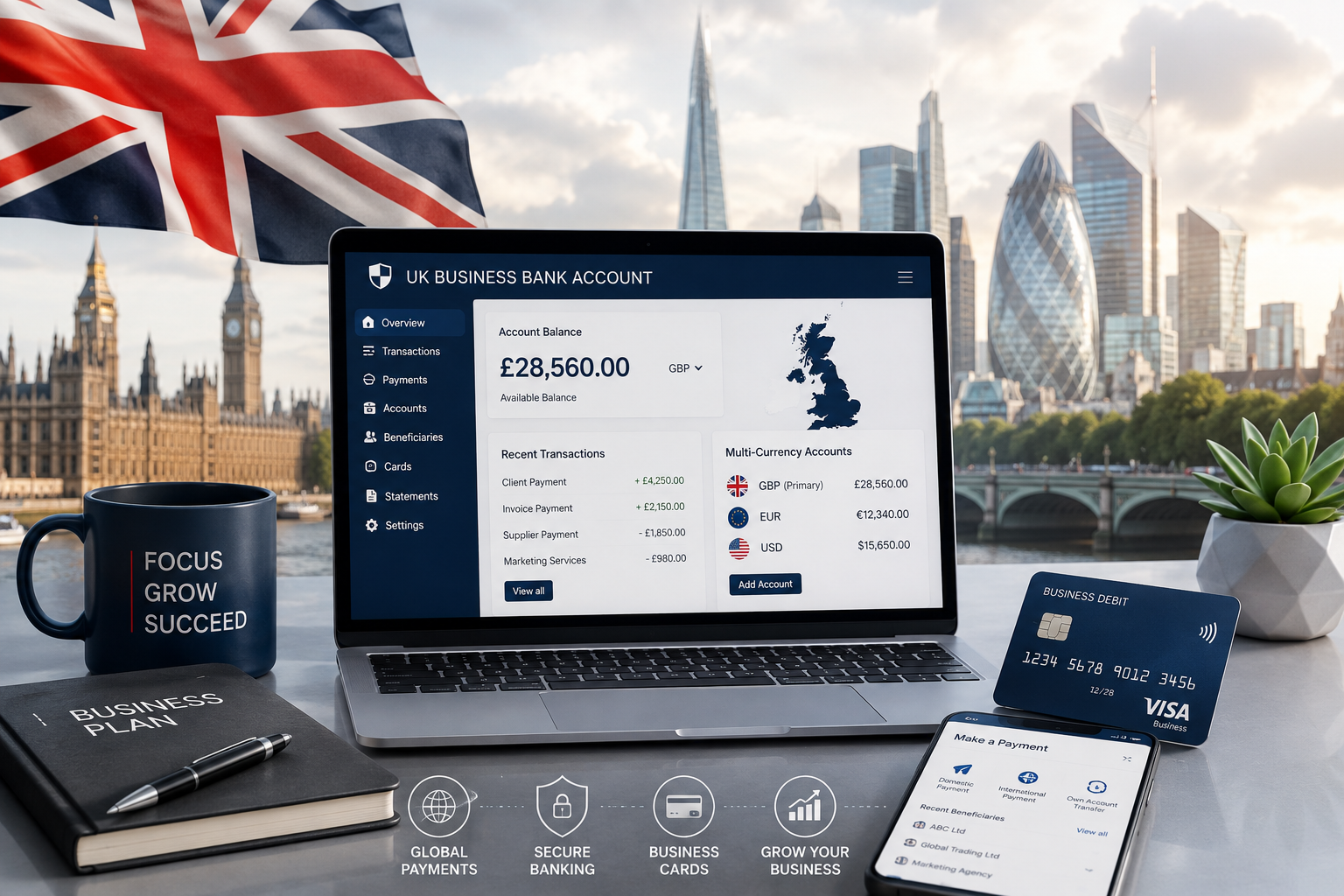
If you operate your Shopify store through a UK limited company, using a dedicated business bank account is generally the most appropriate arrangement.
Your Shopify sales revenue can then be paid into the company's account rather than being mixed with personal transactions.
This can make it easier to manage:
It also provides clearer financial records for the company.
For standard Shopify Payments payouts in the UK, Shopify currently requires an eligible GBP bank account located in the United Kingdom that can receive Faster Payments Service (FPS) transfers.
Certain account types are not supported, so businesses should check that their account meets Shopify's current requirements before connecting it.
Yes. One of the main reasons businesses use Shopify is the ability to sell to customers in different countries.
A UK company could operate a Shopify store serving customers in markets such as the:
United Kingdom → GBP
Europe → EUR
United States → USD
The currency displayed to customers and the currency ultimately paid to your business account are not necessarily the same.
Your Shopify Payments configuration, payout currency and banking arrangements determine how the funds are ultimately settled.
Potentially.
Shopify supports multi-currency payouts for eligible UK merchants, subject to requirements such as the merchant's Shopify plan, payout currency and bank-account location.
This can be useful for international e-commerce businesses that generate substantial sales in currencies such as USD and EUR.
However, accepting a customer's payment in USD or EUR does not automatically mean your company will receive the payout in the same currency.
It can be particularly useful for an international e-commerce company.
For example, a UK Shopify company may:
Receive customer revenue in multiple markets
↓
Manage GBP, EUR and USD
↓
Convert currencies when required
↓
Pay international suppliers
This can provide greater control over international cash flow.
However, Shopify has specific requirements for payout accounts, so businesses should confirm that the particular currency account they intend to connect is eligible.
A person does not generally have to live in the UK to be a director of a UK limited company. However, the company itself must meet UK company requirements, including having an appropriate UK registered office address.
A non-UK resident may therefore be able to own or operate a UK company that sells through Shopify.
However, forming a UK company does not automatically guarantee access to Shopify Payments or a UK business bank account.
Payment providers and financial institutions conduct their own verification and eligibility checks.
A UK private limited company does not generally need to have a UK-resident director.
This means an overseas entrepreneur may potentially establish a UK company and use it for an e-commerce business.
However, banking, payment processing, tax and regulatory requirements should be considered separately.
The fact that a company is registered in the UK does not automatically mean every financial provider will accept it.
That depends on the business.
A limited company can be attractive to entrepreneurs who want to build a more structured e-commerce operation, particularly if the business will have substantial sales, international customers or multiple payment channels.
A company structure can also make it easier to keep business activities separate from personal finances.
However, operating a limited company also creates additional responsibilities, including company filings, accounting records and tax obligations.
Yes, a UK company can potentially operate more than one Shopify store.
For example, one company might operate different stores for different brands or product categories.
The business can then centralise its income and expenses while maintaining appropriate records for each store.
Shopify also states that eligible merchants can use the same bank account for Shopify Payments payouts across multiple stores.
Potentially, yes.
A UK company does not have to operate exclusively through Shopify.
An e-commerce company might generate revenue through several channels, such as:
Shopify → Company
Amazon → Company
Other marketplaces → Company
The same company business account may also potentially be used to manage payouts from multiple sales channels, subject to each platform's requirements.
Once a Shopify business starts generating regular revenue, managing incoming and outgoing payments efficiently becomes increasingly important.
A suitable business account can help a company:
For businesses selling internationally, access to GBP, EUR and USD can also be valuable.
No, you do not need a UK limited company simply to start selling on Shopify.
Individuals and other business structures can also operate Shopify stores, depending on their circumstances.
However, forming a UK limited company may be suitable if you want to build your Shopify store as a structured UK business, open a dedicated business account and expand into international markets.
For international Shopify sellers, the combination of a UK company and suitable business banking can also make it easier to manage GBP, EUR and USD payments, currency conversion and overseas supplier payments.
Before choosing your structure, consider your country of residence, tax obligations, expected sales, payment-processing requirements and banking needs.