By

August 21, 2026
Do I Need Separate Currency Accounts for an International E-Commerce Business?
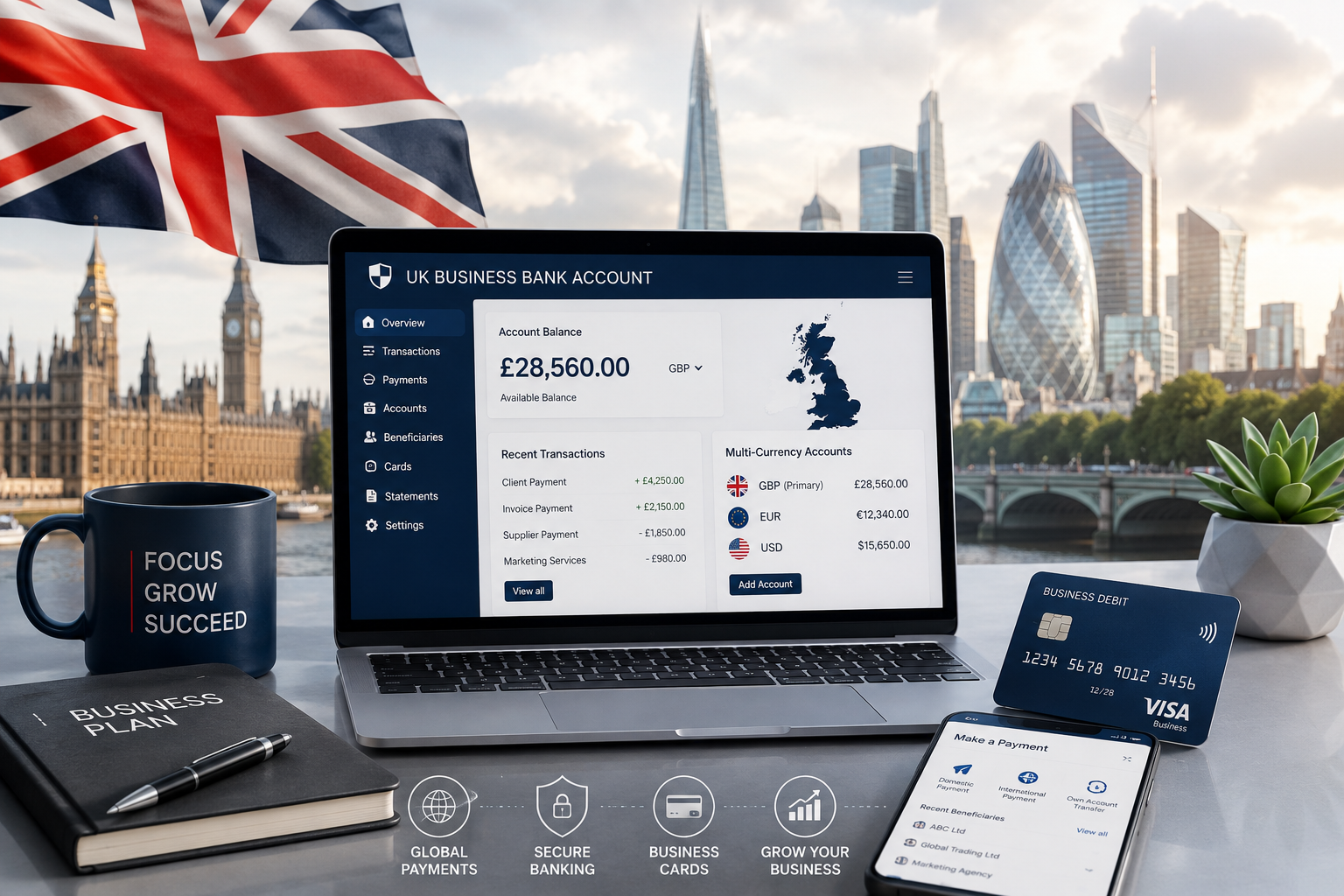
Not necessarily. An international e-commerce business does not always need separate bank accounts for every currency. A multicurrency business account may allow a UK company to manage GBP, EUR and USD from one account or platform.
This can make it easier to receive international sales, convert currencies and pay overseas suppliers.
Instead of opening completely separate accounts, your company may have individual currency balances within one business account.
For example:
GBP Balance — £
EUR Balance — €
USD Balance — $
Your company can then receive, hold, convert and send supported currencies according to its business needs.
International e-commerce businesses often receive revenue and pay expenses in different currencies.
For example:
UK customers → GBP
European customers → EUR
US customers → USD
At the same time:
UK expenses → GBP
European suppliers → EUR
International suppliers → USD
Managing these currencies separately can reduce unnecessary conversions.
Potentially.
A multicurrency business account may allow your company to manage all three currencies from one platform.
However, check what receiving details are provided for each currency.
For example, you may require:
Features vary between providers.
Potentially.
Suppose your company receives $50,000 in USD and needs to pay a supplier $30,000 in USD.
Instead of:
USD → GBP → USD → Supplier
you could potentially:
Receive USD → Keep USD → Pay USD Supplier
Only the remaining funds would need to be converted if your business requires GBP.
The same principle applies to EUR.
Separate accounts may still make sense if:
For many businesses, however, managing several currencies through one multicurrency platform can be simpler.
If several online stores belong to the same UK limited company, they may potentially use the same multicurrency business account.
For example:
UK Store → GBP
European Store → EUR
US Store → USD
↓
One Multicurrency Business Account
Clear transaction records should still be maintained for each store.
Potentially.
A multicurrency account can allow an international e-commerce company to match revenue with expenses:
Receive GBP → Pay GBP expenses
Receive EUR → Pay EUR suppliers
Receive USD → Pay USD suppliers
This can simplify international cash flow.
If your company regularly receives or sends EUR, an IBAN can be particularly useful.
An account supporting EUR and SEPA payments may make it easier to receive European payments and pay European suppliers.
For an international e-commerce company, consider whether the account supports:
The right setup depends on where your customers and suppliers are located.
Not necessarily. A multicurrency account may provide a USD balance within the same business platform.
Not necessarily. You may be able to manage EUR alongside GBP and USD.
Potentially. A multicurrency account may allow you to maintain EUR or USD balances until you decide to spend or convert them.
Potentially. This can help avoid unnecessary currency conversions when your revenue and supplier expenses use the same currency.
It can be particularly useful for businesses selling internationally, receiving multiple currencies and paying overseas suppliers.
You do not necessarily need separate business accounts for every currency used by your international e-commerce company.
A multicurrency account may allow you to manage:
GBP + EUR + USD → One Business Platform
This can create a simpler international payment structure:
Receive in multiple currencies → Keep currencies separately → Pay suppliers → Convert only when needed
For an e-commerce business trading across the UK, Europe and the US, this can make international payments and currency management considerably easier.