By

August 21, 2026
How Can an E-Commerce Business Receive USD Payments Without Converting Them to GBP?
An e-commerce business can potentially receive USD payments without converting them to GBP by using a multicurrency business account that supports a USD balance and USD payment details.
Instead of automatically converting US sales into pounds, the company can keep the funds in USD and decide when to convert them or use the dollars to pay USD expenses.
A typical payment flow could be:
US Customer → Pays USD → Payment Processor → USD Business Balance
Instead of:
US Customer → Pays USD → Automatic Conversion → GBP Business Account
This gives the business greater control over its foreign-currency revenue.
Your business will generally need:
The exact setup depends on the providers involved.
Yes, provided your online store and payment processor support USD.
Your US customers could see prices such as:
$49.99 USD
rather than a GBP price.
However, accepting a customer's payment in USD does not necessarily mean your business will receive the settlement in USD.
Your payment processor must also support USD settlement to your chosen account.
Consider a $1,000 payment.
Customer pays $1,000 → Processor converts USD to GBP → Business receives GBP
Customer pays $1,000 → Processor settles USD → Business receives USD
If your goal is to keep dollars, you need to check the settlement currency, not simply the currency displayed at checkout.
Potentially.
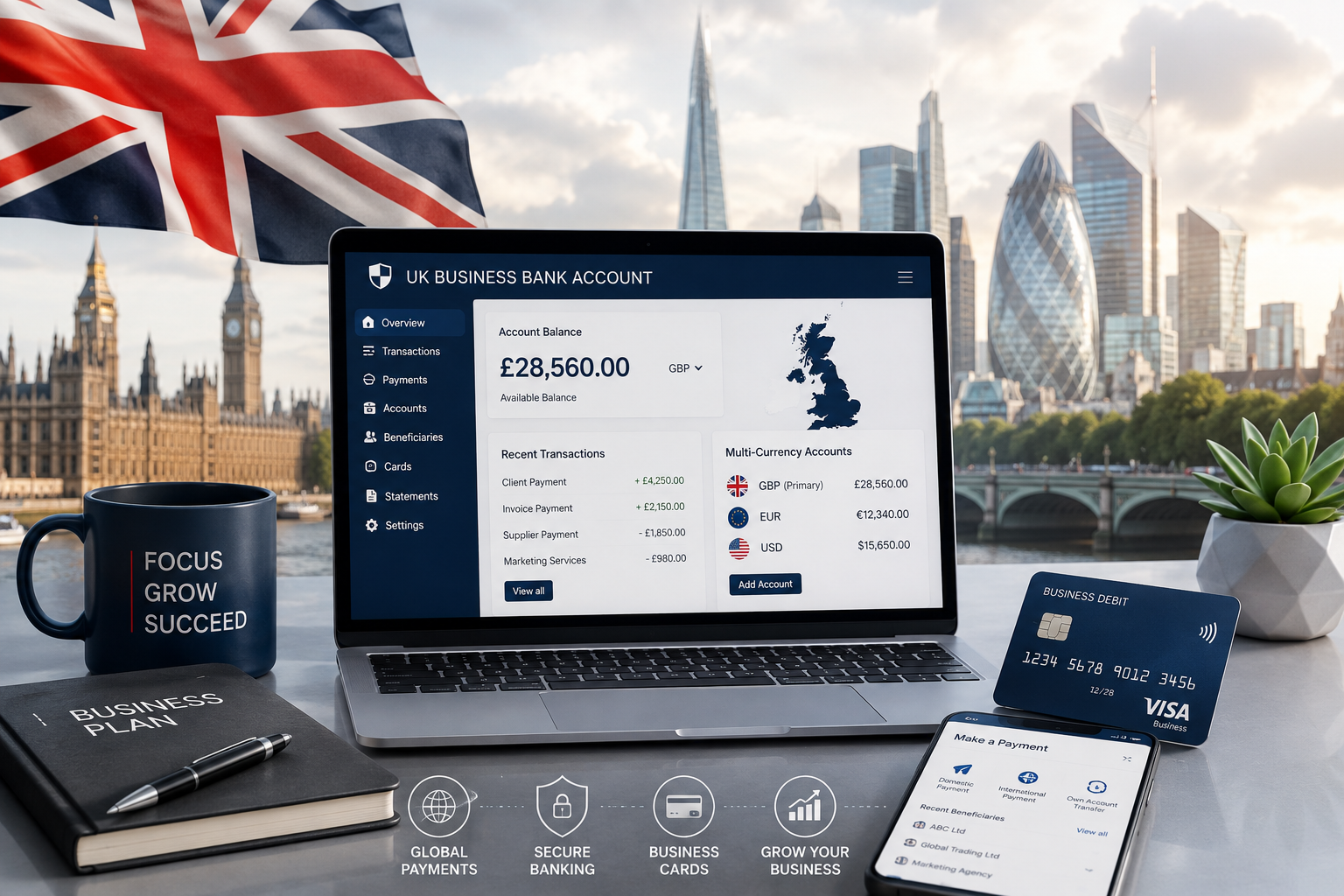
A multicurrency account may provide separate balances such as:
GBP Balance — £
EUR Balance — €
USD Balance — $
Your company can then decide when the USD should be converted.
Potentially, and this can be one of the main advantages of keeping USD.
For example:
Receive $50,000 from customers
↓
Pay $30,000 to USD suppliers
↓
Keep or convert remaining $20,000
Without a USD balance, the payment flow could potentially involve:
USD → GBP → USD
This may result in unnecessary currency conversions and additional FX costs.
Yes, provided your account supports currency conversion.
The company could decide when and how much to convert:
USD Balance → Convert → GBP Balance
You may therefore keep part of your revenue in USD while converting only the amount required for UK expenses.
Potentially.
If you sell through international marketplaces, check whether the marketplace allows USD settlements to your business account.
Important factors include:
Each marketplace can have different requirements.
Potentially.
Being a UK limited company does not necessarily mean every payment must be received in GBP.
An international e-commerce company may have genuine business requirements for several currencies, such as:
GBP — UK sales and expenses
EUR — European sales and suppliers
USD — US sales and international suppliers
A multicurrency account can help manage these currencies from one business platform.
Keeping USD can be useful if your company:
If nearly all your expenses are in GBP, however, keeping large USD balances may be less useful.
Look for a business account that supports:
Most importantly, check whether your payment processor can settle USD directly into the account.
Potentially. You need an account capable of receiving and maintaining USD.
Potentially. A multicurrency business account may provide a separate USD balance.
Yes, provided your checkout and payment processor support USD.
Potentially. If the account supports USD outgoing payments, you may be able to pay suppliers without converting to GBP first.
Potentially. Multicurrency accounts commonly provide currency-conversion facilities, although rates and fees vary.
An e-commerce business can potentially receive USD without automatically converting it to GBP by using a multicurrency business account with USD receiving and settlement capabilities.
The ideal payment flow is:
Customer pays USD → Receive USD → Keep USD → Pay USD expenses → Convert only when needed
For a UK e-commerce company selling internationally, managing GBP, EUR and USD separately can provide greater control over payments, supplier costs and currency conversion.