By

August 23, 2026
How Can Marketplace Sellers Reduce Currency Conversion Fees?
Marketplace sellers can reduce currency conversion fees by holding multiple currencies, avoiding unnecessary conversions, matching marketplace payouts with supplier-payment currencies, and comparing the true FX cost rather than looking only at headline transfer fees.
For UK companies selling internationally through Amazon, Shopify, eBay, Etsy and other marketplaces, even a small difference in currency conversion costs can become significant as sales increase.
Currency conversion occurs whenever money needs to move from one currency into another.
For example, a UK marketplace seller might:
Sell in USD → receive funds → convert USD to GBP → pay a supplier in USD
If the business converts USD into GBP and then later converts GBP back into USD, it has potentially paid for two currency conversions when one or both might have been avoidable.
Currency costs can come from the explicit conversion fee, the exchange-rate markup or spread, and other transaction charges.
The goal should therefore be to reduce unnecessary conversions, not simply search for an account advertising low transfer fees.
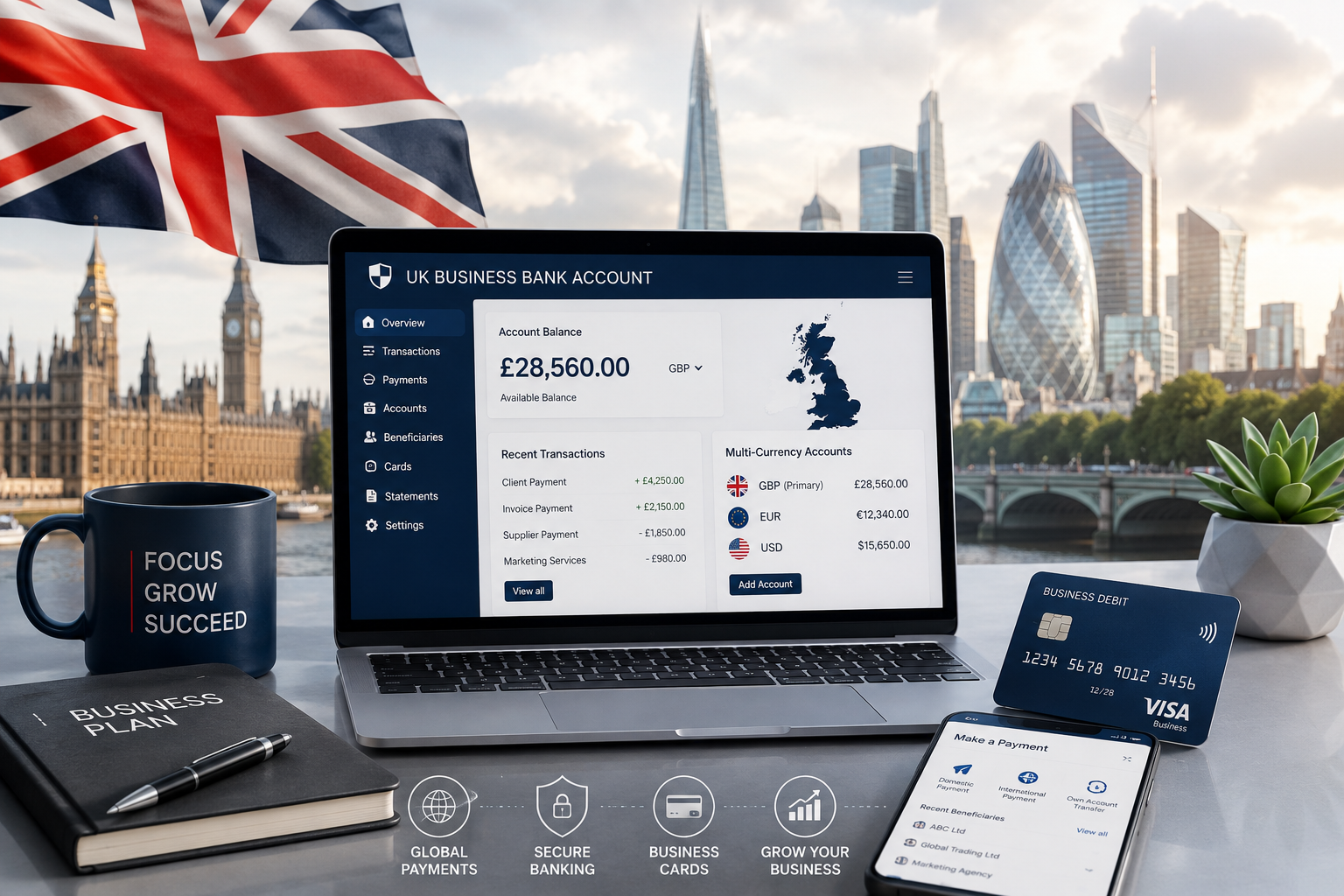
One of the most practical options for an international marketplace business is a multicurrency business account.
Depending on the account and marketplace involved, your company may be able to hold currencies such as:
Instead of automatically converting every incoming payment into GBP, the business can potentially retain funds in their original currency.
For example:
Receive USD → Hold USD → Pay USD supplier
Rather than:
Receive USD → Convert to GBP → Convert back to USD → Pay supplier
Avoiding the second structure can reduce unnecessary FX transactions.
Look at where your money comes from and where it goes.
Suppose your company receives $50,000 from US marketplace sales and needs to pay $30,000 to suppliers or service providers in USD.
If your account and marketplace arrangements permit it, retaining part of the revenue in USD could allow the business to use those funds for its USD expenses.
Only the remaining amount would need to be converted into GBP or another operating currency.
The same principle can apply to EUR.
This is sometimes called natural hedging: matching income and expenditure in the same currency can reduce how much money needs to be exchanged.
Automatic conversion can be convenient, but convenience doesn't necessarily mean it is the lowest-cost option.
Before choosing how marketplace payouts are handled, determine:
What currency is the sale in?
What currency does the marketplace pay out?
Does the marketplace perform a conversion?
Can your account receive that payout currency?
What exchange rate and fee apply?
This is especially important because marketplace rules differ.
For example, Etsy says that when a seller's listing currency differs from their Payment account currency, Etsy converts the funds and currently applies a 2.5% currency conversion fee.
Etsy provides a particularly clear example of why currency setup matters.
If your Etsy shop currency differs from the currency of your Payment account, Etsy says a 2.5% currency conversion fee applies to the sale amount when conversion is required.
Therefore, sellers should understand the relationship between their:
Listing currency → Payment account currency → Bank account currency
Etsy notes that the currency in which Etsy Payments funds are deposited is determined according to the country of the bank account, with some country-specific exceptions.
The best configuration will depend on where the business and bank account are located.
International eBay sellers should also examine how their listings and payout currencies interact.
eBay explains that when it needs to convert funds, its transaction exchange rate consists of a base exchange rate plus a currency conversion charge.
This makes it important to consider which eBay marketplace you're selling through, the currency of your listings and the currency in which you ultimately receive your money.
Reducing the number of conversions can be as important as finding a lower conversion rate.
Shopify sellers should examine both the currencies customers use at checkout and the currency in which the business receives payouts.
Shopify supports international and multicurrency selling, but the way currencies, conversion and payouts work depends on the merchant's setup.
For international businesses, don't assume that displaying prices in USD or EUR means the business will necessarily receive and retain those exact currencies without conversion.
Review the payout structure and FX costs applicable to your particular setup.
A provider advertising a low conversion fee isn't necessarily offering the cheapest conversion.
You should compare the final amount received after conversion.
For example, imagine two providers converting £100,000 into another currency.
Provider A might advertise:
0.30% fee
Provider B might advertise:
0.50% fee
At first glance, Provider A looks cheaper.
However, if Provider A applies a larger markup to its exchange rate, Provider B could still deliver more of the destination currency.
Marketplace businesses should therefore compare the all-in FX cost, including:
The most important figure is ultimately how much destination currency the business receives.
Double conversion can quietly reduce marketplace margins.
Consider a business that receives €20,000 from European sales.
It converts:
EUR → GBP
A few weeks later, it needs €12,000 to pay a European supplier.
It then converts:
GBP → EUR
The company has effectively converted part of the same money twice.
If the business could retain EUR and use those funds for EUR expenses, the second conversion might be avoided.
This becomes increasingly important as marketplace turnover grows.
Ask suppliers which currencies they accept.
If a Chinese supplier invoices your company in USD and your marketplace business already receives USD, using those USD funds may be more efficient than converting them into GBP first.
Likewise:
EUR revenue → EUR supplier
USD revenue → USD supplier
GBP revenue → GBP expenses
Matching currencies can reduce the amount of money that needs to pass through the FX market.
However, always compare the supplier's pricing across currencies. A supplier offering payment in GBP may incorporate its own currency-conversion margin into the invoice price.
Businesses making frequent small conversions should compare the cost with making fewer, larger conversions.
For example, instead of converting marketplace proceeds every day, a business might accumulate a currency balance and convert it periodically.
Whether this reduces costs depends on the provider's pricing structure.
It also introduces exchange-rate risk because currencies can move while funds are being held.
Therefore, businesses shouldn't delay conversion purely in an attempt to predict future exchange rates.
Marketplace sellers should periodically calculate what they are actually paying for currency conversion.
Compare the rate you receive against an appropriate market reference rate at approximately the same time.
If the market rate implies that £10,000 should buy a particular amount of USD but your actual transaction delivers substantially less, the difference can reveal the effective cost of the conversion.
Don't look only for a line on the statement called "FX fee."
Some currency costs can be incorporated into the exchange rate itself.
Marketplace sellers should treat currency conversion as a measurable business cost.
For example, suppose an international e-commerce company generates:
£500,000 equivalent annual marketplace revenue
If its effective currency conversion costs average 2%, that represents approximately:
£10,000 per year
If the effective cost could be reduced to 0.75%, the equivalent cost would be:
£3,750 per year
That is a potential difference of:
£6,250 per year
These figures are illustrative, but they show why FX costs become increasingly important as international marketplace revenue grows.
Businesses selling through several platforms may benefit from looking at their currency exposure as a whole.
For example:
Amazon → USD
Shopify → GBP + EUR + USD
eBay → GBP + EUR
Etsy → GBP + EUR
↓
Multicurrency Business Account
↓
GBP | EUR | USD
↓
Suppliers | Advertising | Operating Expenses
The exact currencies that can actually be paid out and retained depend on each marketplace's rules and the business account being used.
But centralising currency management can make it easier to identify opportunities to offset income against expenses before converting the remaining balances.
An account suitable for a marketplace business processing £20,000 annually may not remain the most economical option when turnover reaches £500,000 or £1 million.
As international sales increase, regularly review:
How much USD, EUR and GBP are you receiving?
How much are you converting?
What percentage are you losing to FX costs?
Which currencies are your suppliers charging you in?
Are you converting currencies unnecessarily?
Even a relatively small reduction in the effective FX percentage can make a substantial difference at higher transaction volumes.
Marketplace sellers can reduce currency conversion fees by building their payment structure around the currencies they receive and spend.
For international sellers, a useful model can be:
Receive USD → Hold USD → Pay USD expenses
Receive EUR → Hold EUR → Pay EUR expenses
Receive GBP → Hold GBP → Pay GBP expenses
↓
Convert only the surplus currency when required
A suitable multicurrency business account can help support this strategy, provided it is compatible with the marketplaces being used.
The key is not simply finding the lowest advertised conversion fee. Marketplace businesses should look at the total FX cost, exchange rate, marketplace conversion rules and number of conversions required.
How can Amazon sellers reduce currency conversion costs?
Review the currencies in which marketplace proceeds are generated and paid out, then determine whether compatible currency balances can reduce unnecessary conversions.
How can Etsy sellers avoid currency conversion fees?
Pay particular attention to the shop listing currency and Payment account currency. Etsy currently states that a 2.5% conversion fee applies when it must convert sales funds because these currencies differ.
Can a multicurrency business account reduce FX fees?
Potentially. It can allow a business to hold different currencies and use them for same-currency expenses rather than automatically converting every incoming payment.
Should marketplace sellers immediately convert USD and EUR into GBP?
Not necessarily. If the company has future expenses in USD or EUR, retaining some of those currencies may reduce unnecessary conversions. However, holding foreign currency also exposes the business to exchange-rate movements.
What is the best way to reduce marketplace FX costs?
Focus on reducing unnecessary conversions, matching revenue and expenses by currency, comparing all-in exchange rates and regularly reviewing the effective percentage your business pays for FX.