By

August 21, 2026
How Can UK E-Commerce Companies Reduce Currency Conversion Costs?
UK e-commerce companies can reduce currency conversion costs by using a multicurrency business account, receiving payments in the original currency and avoiding unnecessary conversions between GBP, EUR and USD.
For businesses selling internationally, even small differences in exchange rates and FX fees can become significant as transaction volumes increase.
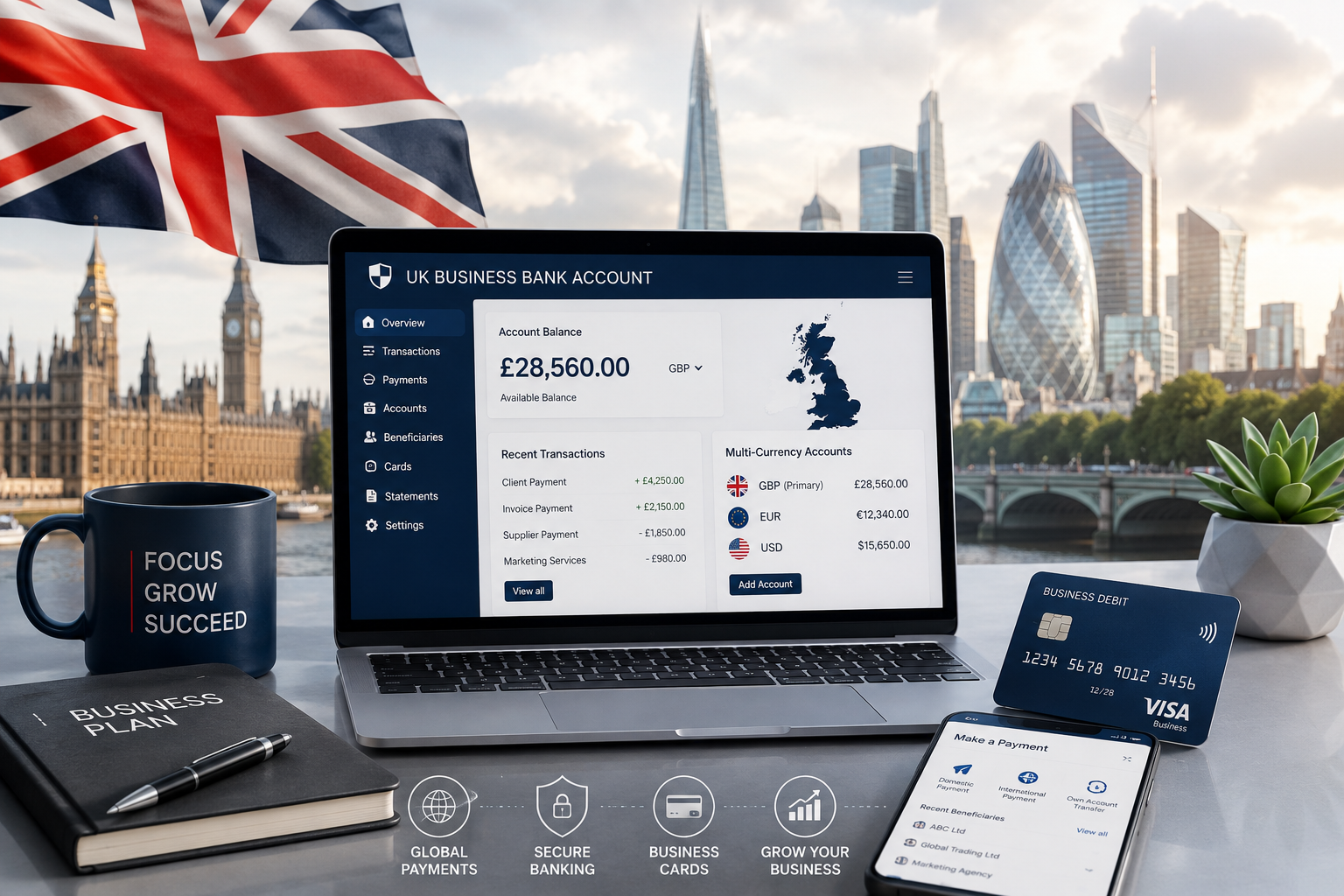
A multicurrency account can allow a UK e-commerce company to manage several currencies separately.
For example:
UK sales → GBP balance
European sales → EUR balance
US sales → USD balance
Instead of automatically converting every international payment into GBP, the business can decide when a conversion is actually required.
If a customer pays in EUR, consider receiving EUR rather than automatically converting the payment into GBP.
Similarly:
USD customer payment → USD balance
EUR customer payment → EUR balance
This can be particularly valuable when the business also has expenses in those currencies.
One of the simplest ways to reduce unnecessary FX costs is to match income with expenses.
For example, imagine your company receives:
$50,000 USD in sales
and needs to pay:
$30,000 USD to suppliers
Instead of:
USD → GBP → USD
the company could potentially:
Receive USD → Keep USD → Pay USD supplier
Only the remaining USD would need to be converted if required.
Payment processors and marketplaces may automatically convert foreign sales into your account's base currency.
For example:
Customer pays €100 → EUR converted → Company receives GBP
If your payment processor supports EUR settlements, an alternative may be:
Customer pays €100 → Company receives EUR
The company can then choose whether to keep, spend or convert the euros.
The currency customers use at checkout and the currency your business receives are not necessarily the same.
A US customer could pay:
$100 USD
while your company receives the GBP equivalent after automatic conversion.
If you want to keep USD, check whether your payment processor supports USD settlement to your USD business balance.
Do not compare providers based only on a headline conversion fee.
Look at the complete cost, including:
A provider advertising "low fees" could still offer a less competitive exchange rate.
Constantly converting small amounts can make cash management inefficient, particularly where fixed transaction or conversion charges apply.
For example, rather than repeatedly converting:
€500 → GBP
€750 → GBP
€300 → GBP
the company may choose to maintain its EUR balance and convert a larger amount when GBP is actually required.
Whether this saves money depends on the provider's fee structure.
If your company receives EUR, consider whether those funds can be used for EUR expenses.
For example:
European customers → Receive EUR → Pay European suppliers in EUR
This avoids converting the money into GBP only to convert it back into EUR later.
An account supporting an IBAN and SEPA payments can be useful for companies regularly dealing with European payments.
Many international suppliers invoice in USD.
For an e-commerce company receiving substantial US sales, maintaining USD can therefore be useful.
For example:
US sales → USD balance → USD supplier
rather than:
US sales → USD converted to GBP → GBP converted to USD → Supplier
Avoiding the additional conversion can reduce FX costs.
Currency conversion costs may seem small when an e-commerce company is processing £5,000 per month.
They become much more significant at:
£50,000 per month
or:
£500,000 per month
For example, a 1% difference in total FX cost on £500,000 of conversions represents £5,000.
Businesses processing significant international volumes should therefore regularly review their payment and currency-conversion arrangements.
Consider a UK company receiving:
£40,000 GBP
€30,000 EUR
$50,000 USD
The company also needs to pay:
£25,000 UK expenses
€20,000 European suppliers
$30,000 international suppliers
Instead of converting everything into GBP, the business could potentially use:
GBP revenue → GBP expenses
EUR revenue → EUR suppliers
USD revenue → USD suppliers
Only surplus foreign currency that the company needs in GBP would require conversion.
No.
A UK company will usually have GBP expenses, so some foreign-currency revenue may eventually need to be converted.
The objective is not to eliminate currency conversion completely.
It is to avoid unnecessary conversions and gain more control over when and how much currency is exchanged.
Consider receiving USD into a USD business balance and using those dollars for USD expenses before converting any surplus to GBP.
Receive EUR into a EUR balance and use those funds for European suppliers or EUR expenses where practical.
Not necessarily. A multicurrency account may allow you to maintain foreign-currency balances and convert funds only when required.
Potentially. It can reduce unnecessary conversions, particularly when the business both receives and spends the same foreign currencies.
For many internationally trading UK e-commerce companies, GBP, EUR and USD are among the most relevant, but the right currencies depend on where the business sells and where its suppliers are located.
UK e-commerce companies can reduce currency conversion costs by matching the currencies they receive with the currencies they spend.
A simple strategy is:
Receive GBP → Spend GBP
Receive EUR → Spend EUR
Receive USD → Spend USD
Then:
Convert only the surplus currency you actually need.
For an international e-commerce business, a multicurrency business account supporting GBP, EUR and USD, international payments and competitive currency conversion can provide greater control over FX costs and international cash flow.