By

August 21, 2026
How Do E-Commerce Businesses Pay Overseas Suppliers?
E-commerce businesses can pay overseas suppliers using international bank transfers, multicurrency business accounts and local payment networks where available.
For UK e-commerce companies importing products from Europe, the US, China or other markets, choosing the right payment method can help reduce currency conversion costs, transfer fees and payment delays.
A typical payment flow is:
UK E-Commerce Company → Business Account → Currency Conversion → International Transfer → Supplier
If the company already holds the supplier's currency, conversion may not be necessary:
USD Balance → USD Supplier
or:
EUR Balance → EUR Supplier
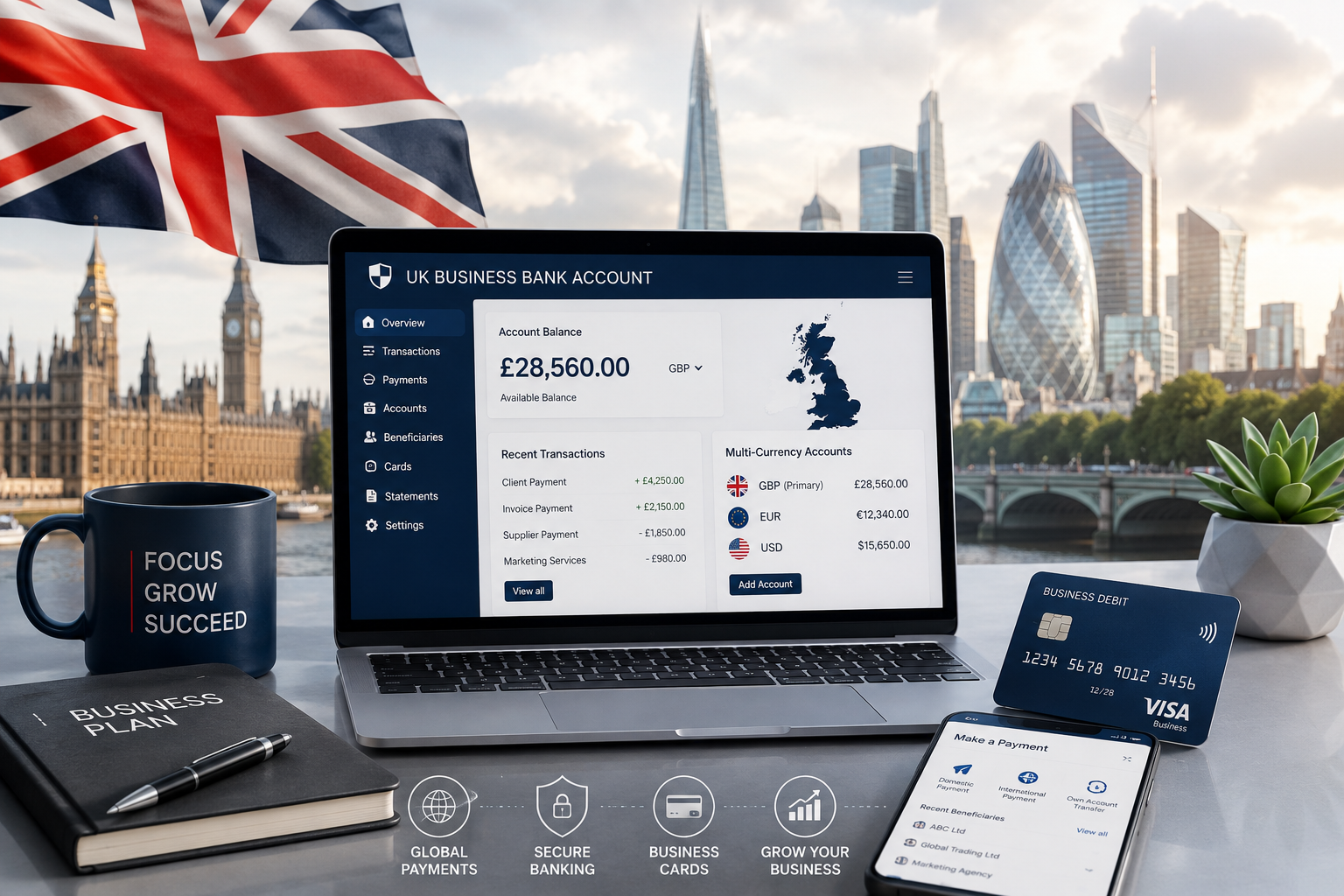
A multicurrency account can be particularly useful for e-commerce businesses with international suppliers.
The company may be able to manage:
GBP — UK expenses
EUR — European suppliers
USD — US and international suppliers
This allows the business to keep different currencies and use them when required.
If a supplier invoices your company in EUR, you may be able to pay directly from your EUR balance.
For example:
EUR Balance → SEPA Payment → European Supplier
If you already receive EUR from European customers, you could potentially use that revenue to pay suppliers without converting it into GBP first.
Many international suppliers accept or invoice in USD.
A UK e-commerce company could:
GBP → Convert to USD → Pay Supplier
Alternatively, if the company receives USD from customers:
Receive USD → Keep USD → Pay USD Supplier
The second arrangement can help avoid unnecessary currency conversion.
E-commerce businesses sourcing products from China may be asked to pay suppliers in currencies such as USD or CNY, depending on the supplier and payment arrangement.
Before making the transfer, confirm:
Always verify payment instructions carefully, particularly if a supplier suddenly requests payment to different bank details.
SWIFT is commonly associated with international bank transfers between financial institutions.
A supplier payment might follow:
UK Business Account → SWIFT Transfer → Overseas Supplier Bank
Depending on the payment route, intermediary and recipient-bank charges may apply.
One strategy is to avoid unnecessary currency conversions.
For example, instead of:
Receive USD → Convert to GBP → Convert GBP to USD → Pay Supplier
the company could potentially:
Receive USD → Keep USD → Pay Supplier in USD
The same principle can apply to EUR.
This depends on the supplier's invoice and agreed payment terms.
If the supplier invoices in EUR, paying EUR may be more straightforward.
If the supplier invoices in USD, paying USD may be preferable.
Always confirm the agreed currency before sending the payment.
Depending on the destination and payment method, you may need:
The beneficiary information should match the supplier you expect to pay.
Transfer times vary according to:
Some payments may arrive quickly, while others can take several business days.
Potentially.
A newly incorporated company may be able to make international supplier payments once its business account is operational.
The provider may request information about:
This can be particularly relevant when a new company sends a large international payment shortly after opening its account.
Potentially.
The director's country of residence does not necessarily determine where the company can send payments.
However, the business account provider must support both the company and the destination country.
Before paying an overseas supplier, verify:
For large payments, independently verify any new or changed bank details with a trusted supplier contact before transferring funds.
Yes, provided its business account supports payments to the supplier's country and currency.
Potentially. A EUR balance and SEPA capabilities can be useful for European suppliers.
Potentially. A multicurrency account may allow you to send USD directly from your USD balance.
Not always. The payment network depends on the destination and currency. European EUR payments, for example, may use SEPA.
Yes, subject to normal business and account requirements. Receiving and paying in the same currency can also reduce unnecessary FX conversions.
E-commerce businesses can pay overseas suppliers through international transfers using the currency agreed with the supplier.
For businesses trading internationally, a multicurrency setup can simplify the process:
Receive EUR → Pay EUR suppliers
Receive USD → Pay USD suppliers
Receive GBP → Convert when required
A business account supporting GBP, EUR and USD, SEPA, international transfers and currency conversion can make it easier to manage international e-commerce supplier payments from one place.