By

August 23, 2026
What Is the Best Type of Business Account for Marketplace Sellers?
For marketplace sellers, the best type of business account is generally one that can receive marketplace payouts, support the currencies you trade in, handle international payments and keep business transactions separate from personal finances.
If you sell through Amazon, Shopify, eBay, Etsy or several marketplaces at the same time, the right account can make it easier to manage payouts, suppliers and currency conversion.
Marketplace businesses operate differently from many traditional companies. You may receive hundreds of customer payments through platforms while receiving consolidated payouts into your business account.
A suitable account should therefore offer:
The exact requirements depend on where your company is established, which marketplaces you use and where your customers and suppliers are located.
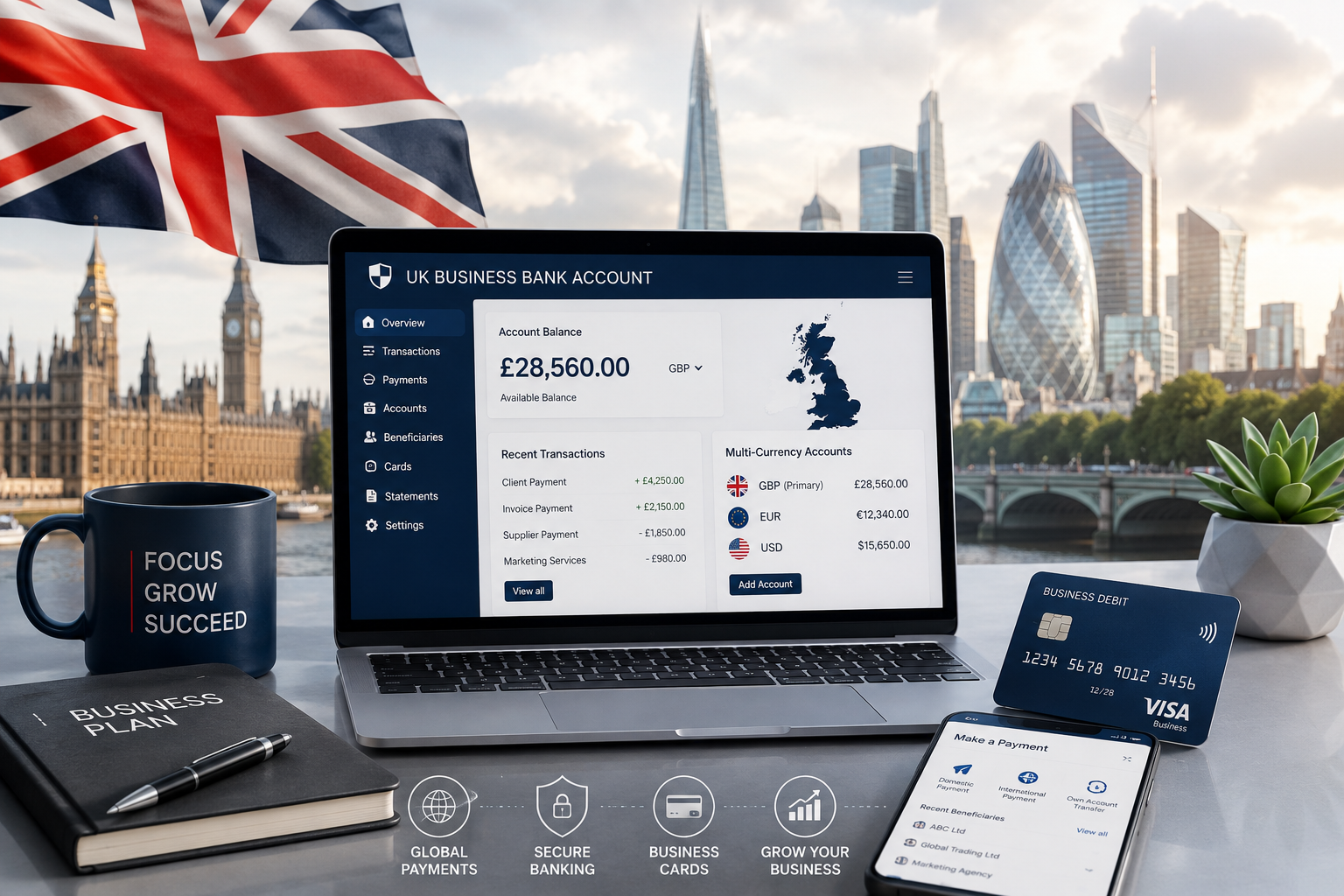
For businesses selling internationally, a multicurrency business account can be particularly useful.
Instead of operating exclusively in GBP, a multicurrency setup may allow your company to hold currencies such as:
GBP — British pounds
EUR — euros
USD — US dollars
Some accounts support additional currencies as well.
This can be valuable when your marketplace revenue and business expenses are denominated in different currencies.
For example, a UK company could receive marketplace revenue in USD, retain USD where supported, use those funds for USD-denominated expenses and convert the remaining balance into GBP when required.
This can reduce unnecessary conversions, although marketplace payout rules and account compatibility must always be checked.
Imagine a UK e-commerce company selling to customers in the UK, Europe and United States.
Its marketplace activity might involve:
Amazon US → USD
European marketplace sales → EUR
UK marketplace sales → GBP
If everything is automatically converted into GBP, the company may incur currency conversion costs.
The problem becomes more noticeable if the business later needs to convert GBP back into USD or EUR to pay overseas suppliers.
A multicurrency structure can potentially reduce these unnecessary conversions by allowing businesses to hold different currencies until they need them.
Potentially, but you should never assume that every currency balance or set of account details will be accepted by every marketplace.
Each platform has its own payout and verification requirements.
For example, eBay verifies the bank details sellers provide for payouts and states that, for a business account, the business name associated with the bank account should match the business name used for the eBay business account.
Shopify also has specific requirements depending on the merchant's country, payout currency and account type.
This means the best account isn't simply the one offering the largest number of currencies. It needs to be compatible with the marketplaces your business actually uses.
Shopify deserves particular attention because its payout requirements can be quite specific.
For standard Shopify Payments payouts in the UK, Shopify currently states that the account must be in GBP, held at a UK financial institution and eligible for Faster Payments. Shopify also lists certain account types that aren't supported for standard payouts.
Shopify separately offers Multi-Currency Payouts to eligible merchants. In the UK, this is currently available on Advanced and Shopify Plus plans, subject to additional account, currency and location requirements.
Therefore, marketplace sellers should check platform compatibility rather than selecting an account based solely on the label "multicurrency."
The same principle applies.
Your business account should provide account details that meet the payout requirements of the marketplace concerned.
If you operate on several platforms, it can be helpful to find an account structure capable of handling multiple sales channels rather than opening a completely separate account for each marketplace.
A typical setup might look like:
UK Limited Company
↓
Business Account
↓
Amazon + Shopify + eBay + Etsy
↓
GBP + EUR + USD
This can centralise marketplace revenue while still allowing transactions to be identified through your bookkeeping records.
For a limited company, a dedicated business account is the appropriate approach.
A limited company is legally separate from its owners, so keeping company money separate from personal money creates a much clearer financial structure.
It also makes it easier to track:
Clear separation becomes particularly important as marketplace sales volumes increase.
Receiving marketplace payouts is only half of the equation.
Many e-commerce companies also purchase inventory, packaging or other services internationally.
For example, your company might receive USD from marketplace sales while also paying suppliers or service providers in USD.
If your business account allows you to hold and send USD, you may be able to use part of your USD balance for those expenses rather than converting the money into GBP first and subsequently converting it back into USD.
The same principle can apply to EUR and other supported currencies.
Marketplace sellers should look beyond the headline account fee.
Currency conversion can become a significant business expense for companies processing substantial international sales.
When comparing business accounts, consider:
Exchange rate — What rate is used when currencies are converted?
FX markup or spread — Is a margin added to the exchange rate?
Conversion fee — Is there a separate transaction fee?
Receiving fees — Does receiving certain international payments cost extra?
Sending fees — What does it cost to pay overseas suppliers?
A low monthly account fee does not necessarily mean the account will be the cheapest option for an international marketplace business.
Usually, not simply because you operate on multiple marketplaces.
Where each platform accepts the account, one business account may potentially receive payouts associated with several sales channels.
For example:
Amazon ↘
Shopify → Business Account
eBay →
Etsy ↗
You can then use marketplace payout reports and bookkeeping records to reconcile income from each platform separately.
Some businesses may still choose additional accounts for budgeting, risk management or operational reasons.
For many UK marketplace businesses selling internationally, a useful account setup is one that provides:
A dedicated business account + GBP receiving capability + international payments + suitable EUR/USD capabilities + competitive currency conversion.
The important word is suitable. A multicurrency account isn't automatically compatible with every marketplace simply because it offers GBP, EUR and USD balances.
Check the payout requirements of each marketplace before opening or connecting an account.
Potentially, yes.
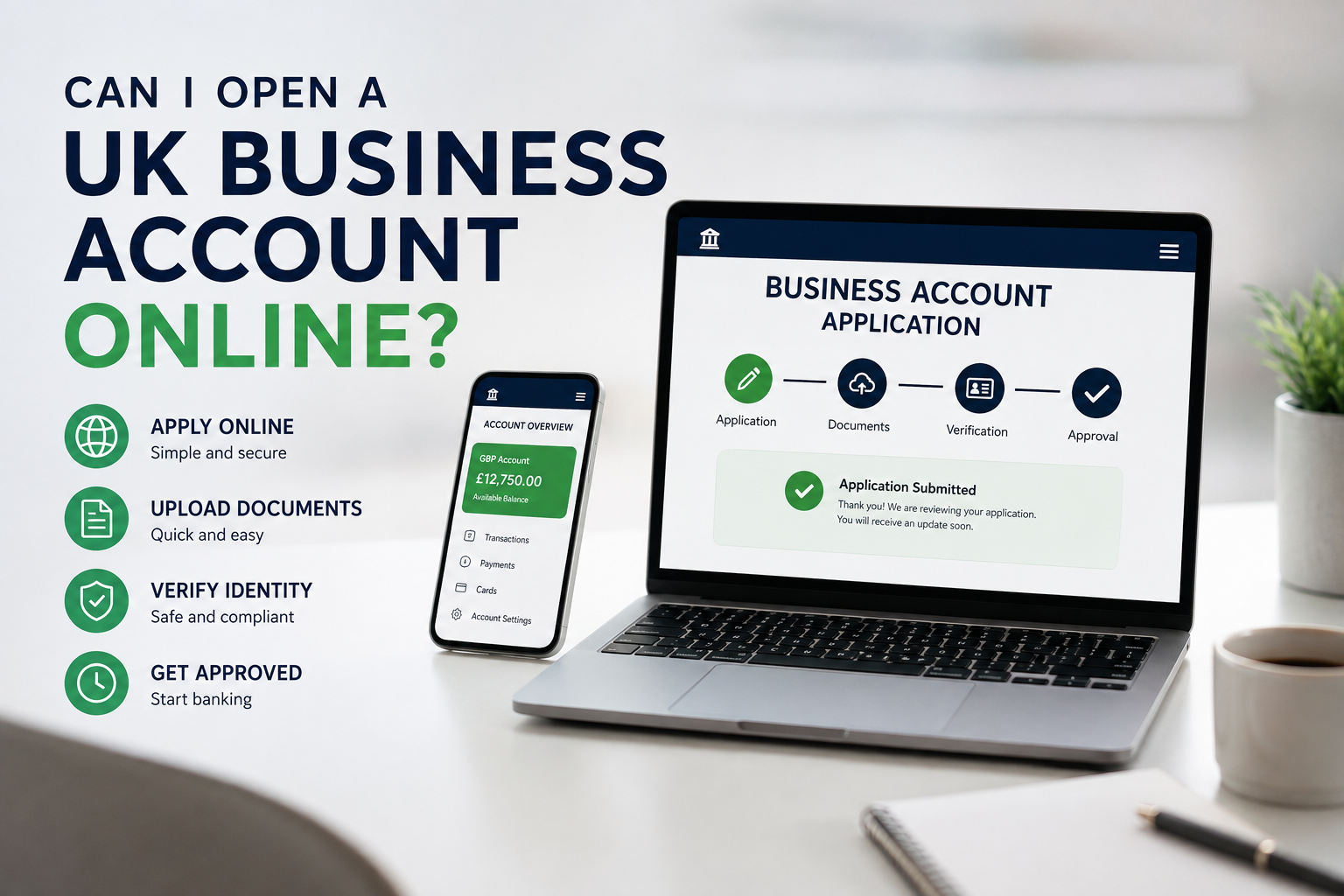
A newly incorporated UK company doesn't necessarily need a long trading history before applying for a business account.
However, the account provider may request information about the proposed business activity, including:
Providing clear and accurate information about the business model can help the account provider understand how the account will be used.
A UK company with a director living outside the UK may still have business-account options, but eligibility depends on the provider.
The provider may require additional identity, residential-address, ownership or business-activity documentation.
Marketplace requirements also need to be considered separately. Having a UK limited company does not automatically guarantee eligibility for every payment service or marketplace payout arrangement.
The best type of business account for marketplace sellers is a dedicated business account that supports the marketplaces, currencies and international transactions the company actually uses.
For a UK business selling internationally through Amazon, Shopify, eBay, Etsy or other online marketplaces, access to GBP, EUR and USD capabilities can be particularly useful.
A good marketplace banking setup should make it easier to:
Receive marketplace payouts → hold required currencies → convert when necessary → pay suppliers → manage everything from one business account.
For international sellers, a multicurrency structure can be valuable, but marketplace compatibility should always come first.
What business account is best for Amazon sellers?
An account that meets Amazon's applicable payout requirements while supporting the currencies and countries in which your business operates.
What business account is best for Shopify sellers?
An account that meets Shopify Payments requirements for your business location and payout currency. UK requirements can differ depending on whether you use standard GBP payouts or eligible Multi-Currency Payouts.
Should marketplace sellers have a multicurrency account?
It can be useful for international sellers receiving or spending money in multiple currencies, provided the relevant account details are accepted by their marketplaces.
Can I receive Amazon, Shopify, eBay and Etsy payouts into one account?
Potentially, yes, if the account satisfies each platform's payout and verification requirements.
What currencies are most useful for UK marketplace sellers?
GBP is usually fundamental for a UK business, while EUR and USD can be useful for companies trading with European and US customers or suppliers.