By

August 31, 2026
Does Every UK Limited Company Need to Identify Its PSCs?
Most UK limited companies must investigate who owns or controls the business, identify any People with Significant Control (PSCs) and report the required information to Companies House.
This obligation usually applies even when the company does not have anyone who meets the PSC conditions. In that situation, the company must file an official statement confirming that it has no registrable PSC. Its PSC information cannot simply be left blank.
A Person with Significant Control in a UK company is an individual who owns or exercises substantial control over the business.
A person will normally qualify as a PSC if they meet one or more of these conditions:
A company can have one PSC, several PSCs or no individual who qualifies as a PSC.
In general, yes. UK private companies limited by shares and companies limited by guarantee are normally covered by the PSC regime.
A company covered by the rules must take reasonable steps to:
The requirement is to investigate and report the company’s position. It does not mean every company must necessarily have a registrable individual PSC.
Some companies genuinely have no individual who meets any of the PSC conditions.
For example, a company could have four shareholders who each own exactly 25% of the shares and voting rights. Because the ownership threshold is more than 25%, none would qualify under those two conditions solely because of their shareholding.
However, the company would still need to consider whether anyone:
If nobody meets any of the conditions, the company must notify Companies House using the appropriate statement confirming that it has no registrable PSC.
No. A company’s PSC information should not be left blank.
The public register should show either:
Leaving the PSC section blank may make the company’s record incomplete and could indicate that its legal duties have not been fulfilled.
Certain companies may be exempt, particularly some companies whose shares are admitted to trading on specified regulated markets and which are already subject to suitable ownership disclosure requirements.
These exemptions do not normally apply to an ordinary private limited company.
A company should not assume that it is exempt simply because:
Unless a specific legal exemption applies, the company must investigate its ownership and control and report the correct PSC information or statement.
Yes, a dormant UK company is generally still subject to the PSC rules.
Dormant status normally affects the company’s accounting and Corporation Tax position. It does not remove its Companies House obligations concerning ownership and control.
A dormant company must therefore identify and report its PSCs, update relevant changes and confirm that its information is accurate when filing its confirmation statement.
A company limited by guarantee can also be covered by the PSC regime, even though it does not have shareholders in the same way as a company limited by shares.
The company should consider who controls its voting rights, who can appoint or remove most directors, and whether anyone otherwise exercises significant influence or control.
Having members with equal voting rights may mean that no individual qualifies through voting rights alone. The company must still examine the remaining PSC conditions and submit the appropriate information or statement.
Where another company owns or controls the business, the UK company must examine its ownership chain.
The corporate shareholder may qualify as a relevant legal entity, or RLE, if it:
If the corporate shareholder is not registrable, it may be necessary to look further up the ownership chain to identify the individuals who ultimately control the company.
Group structures, overseas shareholders, trusts and partnerships can make the analysis more complicated. Professional advice may be appropriate where the controlling person or registrable legal entity is unclear.
Yes. Nationality and country of residence do not determine whether someone is a PSC.
A non-UK resident who owns more than 25% of a UK company, controls more than 25% of its voting rights or meets another PSC condition will generally need to be registered.
The PSC rules apply to the ownership and control of the UK company, regardless of where the controlling person lives.
Before reporting an individual PSC, the company generally needs to obtain and confirm information including:
Most PSC information is displayed on the public Companies House register. Residential addresses and full dates of birth are not normally made public.
PSCs must also comply with current Companies House identity-verification requirements and provide their personal code within the applicable period.
A company must monitor its PSC position and report relevant changes. It should not wait until its next confirmation statement.
A company generally has 14 days to update its PSC information after confirming a change and a further 14 days to notify Companies House.
Reportable changes may include:
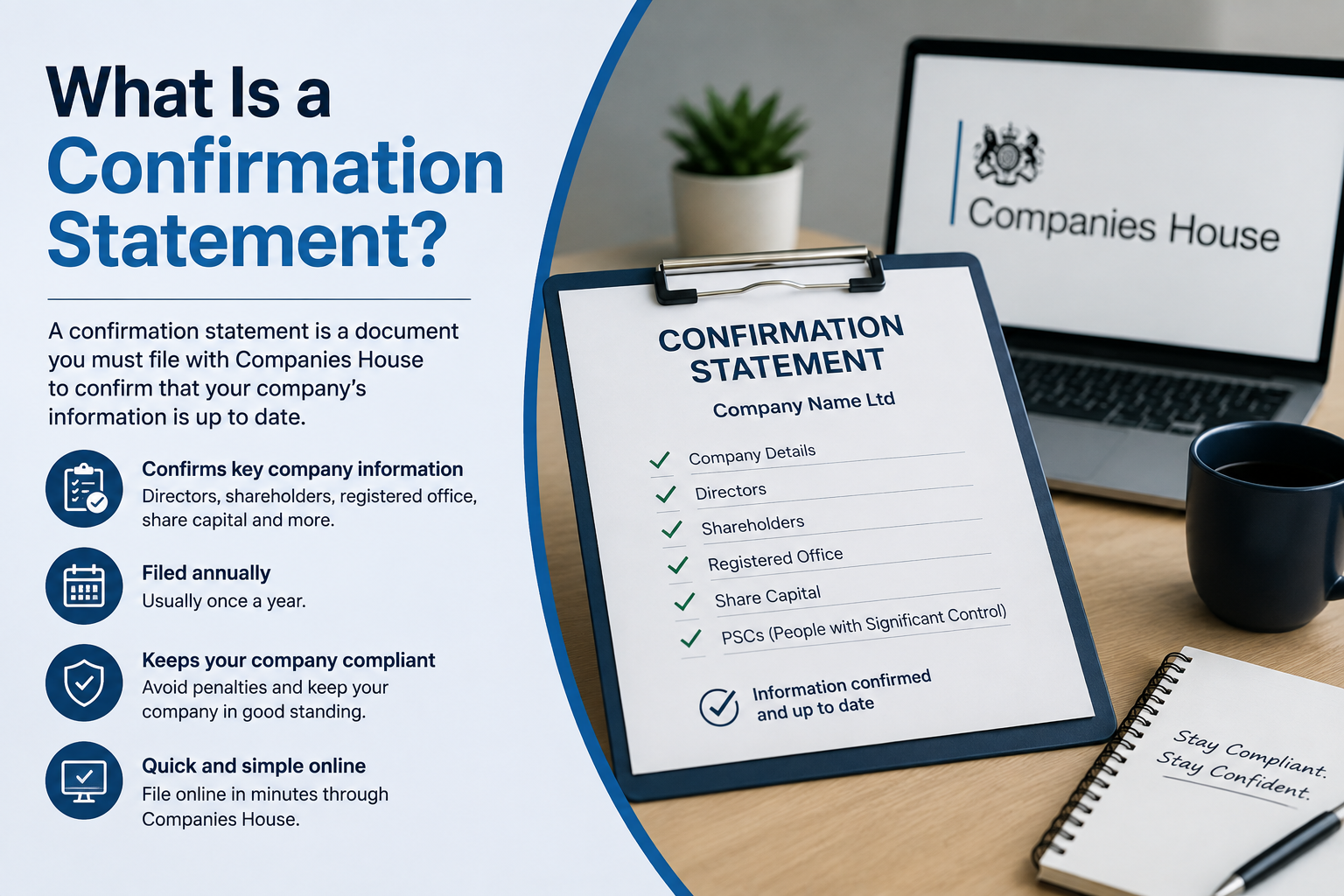
The company must also confirm through its annual confirmation statement that the information held by Companies House is accurate.
The company must take reasonable steps to identify the people or legal entities that own or control it.
This may involve reviewing:
The company may need to send formal notices to people it believes could hold relevant information. If its investigation is still continuing, it should submit the appropriate prescribed statement rather than leaving its PSC information blank.
Failing to investigate, report or update PSC information can be a criminal offence. The company and its officers may face penalties for non-compliance.
A person who fails to respond to a valid information notice or knowingly provides false information may also commit an offence. In certain circumstances, restrictions may be placed on the person’s shares or voting rights.
Incomplete or inaccurate PSC information can also cause practical problems during business-account applications, investment, lending, company sales and compliance checks.
Usually, yes. If the same individual owns all the shares and controls all the voting rights, that person will normally be both the director and the PSC.
No. Only shareholders who meet at least one PSC condition must be registered. Owning exactly 25% or less does not qualify under the share ownership condition alone.
Yes. However, the company must report that it has no registrable PSC. It cannot leave its PSC information blank.
No. A director is a PSC only if they satisfy one or more of the PSC conditions. Holding the position of director by itself does not normally make someone a PSC.
Yes. A company that has not started trading is generally still required to investigate and report its ownership and control.
Companies must confirm through their annual confirmation statement that their Companies House information is accurate. Changes to PSC information must be reported when they occur rather than being held back until the next statement.
Almost every ordinary UK private limited company must identify the people or legal entities that ultimately own or control it.
If the company has one or more PSCs, their details must be reported. If it has no registrable PSC, it must file the appropriate statement. If the company is still investigating, it must report that position rather than leave the information blank.
Only a limited category of companies benefits from an exemption. Most small, privately owned, dormant and non-trading companies remain subject to the PSC rules.
For the latest filing requirements, consult the official Companies House guidance on People with Significant Control.
This article provides general information and does not constitute legal or professional advice.