By

August 23, 2026
What Does a UK Company Need to File With Companies House?
A UK limited company must submit certain information and documents to Companies House throughout its lifetime. The main ongoing filings include annual accounts and a confirmation statement, as well as updates when important company details change.
Keeping Companies House records up to date is one of the key responsibilities of company directors.
Most UK limited companies must file annual accounts with Companies House.
Depending on the company's size and circumstances, the accounts may include:
The exact filing requirements can vary for micro-entities, small companies and larger businesses.
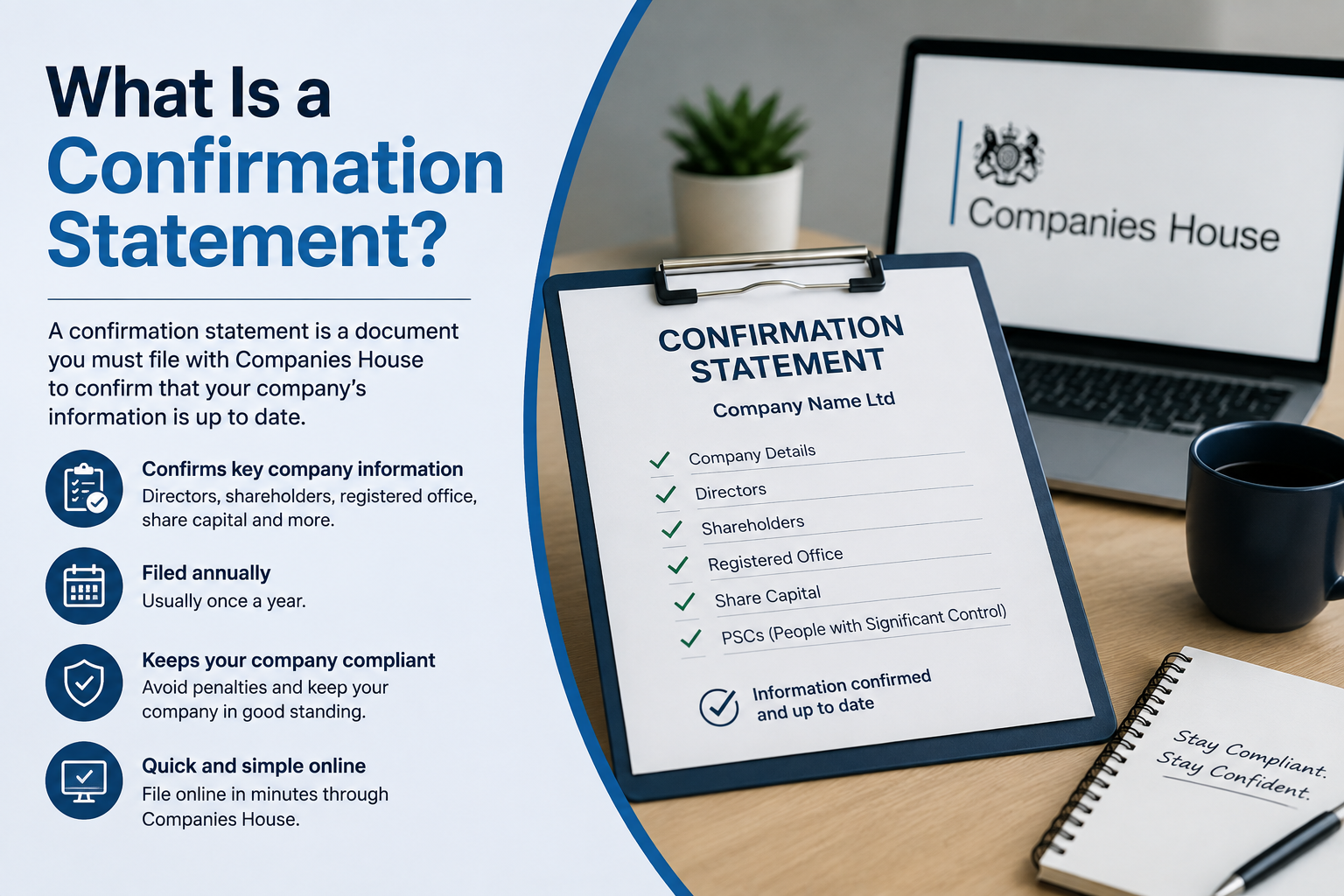
A company must generally file a confirmation statement at least once every 12 months.
This confirms that important information held by Companies House is correct, including details relating to the company's:
You must file a confirmation statement even if nothing has changed.
Companies House must also be informed when certain company information changes.
This can include changes to:
Different changes have different filing requirements and deadlines.
If a director is appointed, resigns or certain details change, the company must update Companies House within the applicable deadline.
Directors are also subject to current identity-verification requirements.
Companies must keep their PSC information accurate and report relevant changes to Companies House.
A PSC is generally someone who has significant ownership or control over the company, such as an individual holding more than 25% of its shares or voting rights.
Failing to meet Companies House filing obligations can lead to consequences.
For example, late annual accounts can result in financial penalties, and continued failure to meet company obligations can potentially lead to enforcement action or the company being struck off the register.
Directors are responsible for ensuring required filings are completed, even when an accountant or other professional prepares them.
Yes.
A dormant company generally still has Companies House obligations, including filing dormant company accounts and a confirmation statement.
Being dormant does not mean the company can simply ignore its filing deadlines.
The main filings a UK limited company normally needs to make with Companies House are:
Annual Accounts + Confirmation Statement + Updates to Important Company Information
Additional filings may be required when directors, shareholders, PSCs, addresses, shares or other company details change.
Directors should monitor their company's filing deadlines carefully, as Companies House requirements continue throughout the life of the company.