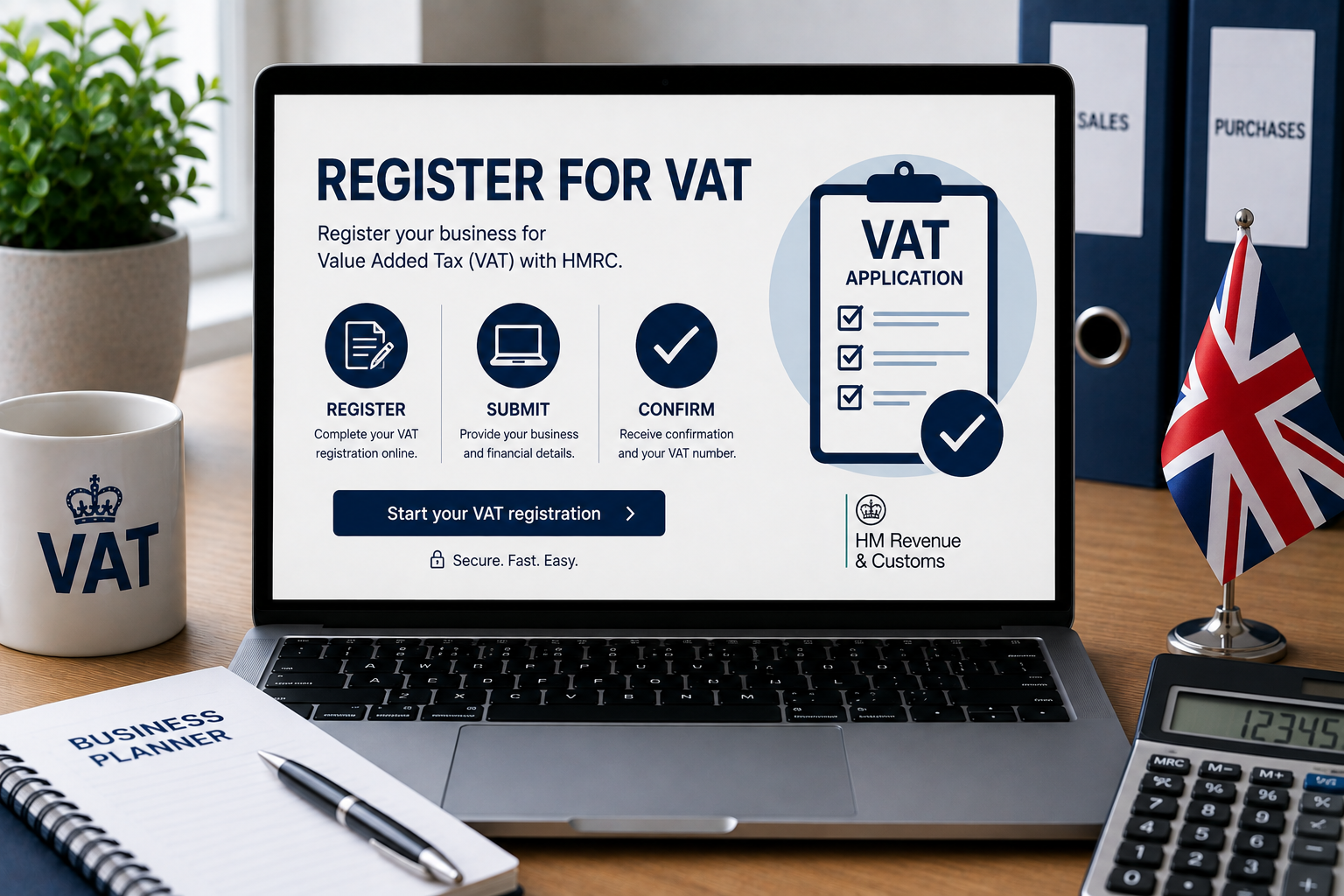
VAT registration for a UK company can take several weeks, although processing times vary depending on the application and whether HM Revenue & Customs (HMRC) needs additional information.

Straightforward applications may be processed faster, while applications requiring additional checks can take longer.

When Should a UK Company Register for VAT?

A UK company generally needs to register when its VAT-taxable turnover exceeds the current VAT registration threshold.

Companies below the compulsory threshold may also choose voluntary VAT registration.

What Happens After Applying?

Once your company submits its VAT registration application, HMRC reviews the information provided.

When approved, the company receives a VAT registration number and confirmation of its effective registration date.

What Can Delay VAT Registration?

Common causes of delays include:

  • Missing or incorrect information
  • Additional identity checks
  • Questions about business activities
  • Complex ownership structures
  • Further documents being requested
  • International trading activities

UK companies with overseas directors or significant international operations may sometimes be asked for additional information.

Can My UK Company Trade While Waiting?

Yes. A company does not normally need to stop trading while waiting for its VAT registration.

However, the company must account for VAT correctly from its effective date of registration, even if the VAT number is issued later.

Accurate sales and purchase records should therefore be maintained while the application is being processed.

How Can I Avoid VAT Registration Delays?

Make sure the application contains accurate information about:

  • Your UK company
  • Business activities
  • Expected or actual turnover
  • Directors and owners
  • Contact details
  • Business bank details where required

If HMRC requests additional information, respond as quickly as possible.

Final Answer

VAT registration for a UK company can take several weeks, but there is no guaranteed processing time for every application.

Straightforward applications may be completed sooner, while applications requiring additional HMRC checks can take longer.

The key is to apply on time, provide accurate information and keep proper records from the company's effective VAT registration date.

‍

‍
UKcompany.blog assumes no responsibility or liability for any errors or omissions in the content of this website or blog. The information contained in this website or blog is provided on an "as is" basis with no guarantees of completeness, accuracy, usefulness, or timeliness.