By

August 23, 2026
What Is Voluntary VAT Registration?
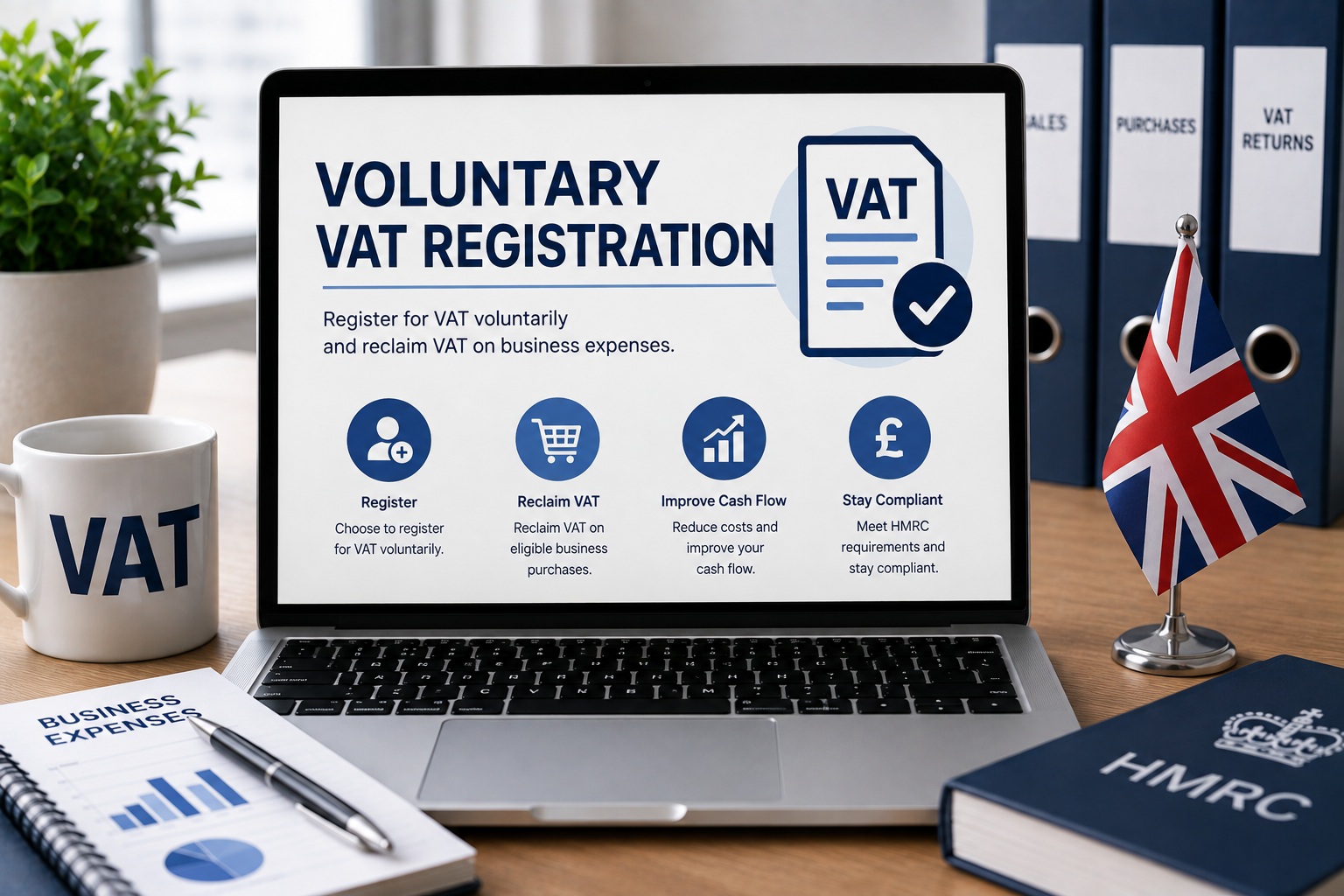
Voluntary VAT registration is when a UK business chooses to register for VAT even though its taxable turnover is below the compulsory VAT registration threshold.
A business may choose to register voluntarily if doing so is beneficial for its circumstances.
One of the main reasons is the ability to reclaim VAT on eligible business expenses.
For example, a business may pay VAT on:
Once VAT registered, the business may be able to reclaim eligible VAT, subject to HMRC rules.
Generally, yes. Once registered, the business must apply VAT correctly to its taxable UK sales.
For example, where the standard 20% rate applies:
£100 price + £20 VAT = £120
The VAT collected is then accounted for through the business's VAT returns.
It can be.
Voluntary registration may be attractive to businesses that have significant VAT-bearing startup costs or mainly sell to other VAT-registered businesses.
However, it may be less attractive for businesses selling primarily to consumers because adding VAT can affect pricing or profit margins.
Potentially, yes.
An online business selling through Amazon, Shopify, eBay, Etsy or its own website may choose voluntary VAT registration if it meets the applicable requirements.
Cross-border sellers should also consider whether other VAT rules apply based on customer and stock locations.
A VAT-registered business generally needs to:
VAT registration therefore creates additional administrative responsibilities.
Potentially, yes.
A business may be able to deregister if it meets HMRC's conditions for VAT cancellation. You should consider the tax consequences before doing so.
Voluntary VAT registration allows a business to register for VAT before it is legally required to do so based on turnover.
It can be beneficial where a business has significant VAT-bearing expenses or mainly deals with VAT-registered business customers.
However, registration also means taking on ongoing VAT charging, record-keeping and reporting responsibilities, so businesses should consider both the costs and benefits before registering.