By

August 24, 2026
What Are Annual Accounts for a UK Limited Company?
Annual accounts are financial statements that a UK limited company prepares for each financial year. They provide information about the company's financial performance and financial position and are also known as statutory accounts.
Most UK limited companies must prepare annual accounts and submit the required information to Companies House. The accounts are also relevant when dealing with the company's Corporation Tax obligations with HMRC.
The exact contents depend on the company's size and circumstances, but annual accounts can include:
Smaller companies may qualify for simplified reporting requirements.
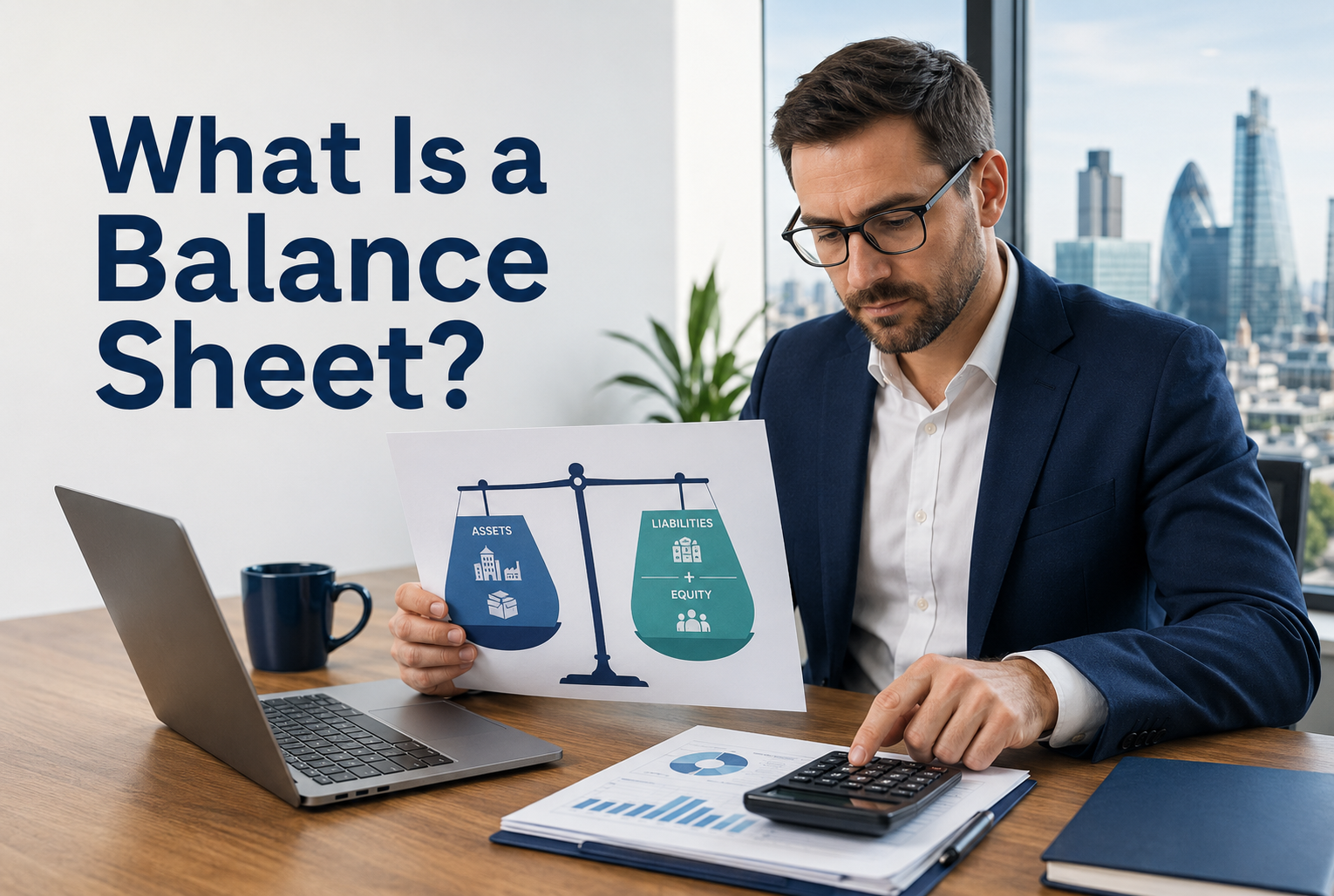
The balance sheet shows the company's financial position at the end of its financial year.
It includes information about:
In simple terms, it helps show what the company owns, what it owes and its overall net financial position.
The profit and loss account, also called a P&L or income statement, shows the company's financial performance over the accounting period.
It normally records income and expenses and shows whether the company made a profit or loss.
For example, if a company generates £150,000 in revenue and incurs £110,000 in relevant costs, its accounts will reflect the resulting financial performance.
Generally, yes.
UK limited companies have annual accounting obligations even when they are small or have relatively simple business activities.
Different requirements can apply to dormant companies, and smaller companies may qualify for reduced reporting or disclosure requirements.
UK limited companies generally have to file their annual accounts with Companies House.
Once filed, company accounts are generally available through the public Companies House register, although the amount of information disclosed can depend on the company's reporting requirements.
It is important to file accounts by the company's deadline because late filing can result in automatic penalties.
The filing deadline depends on the company's circumstances.
For many established private limited companies, annual accounts are generally due at Companies House nine months after the end of the company's financial year.
Different rules apply to a company's first accounts, so new companies should check their specific accounting reference date and filing deadline.
No.
Annual accounts and a Company Tax Return are separate requirements.
Annual accounts report the company's financial performance and position.
A Company Tax Return is submitted to HMRC and is used to report information relevant to the company's Corporation Tax liability.
The figures are connected, but the documents serve different purposes.
No. A UK limited company is not automatically required to hire an accountant.
Directors can prepare the company's accounts themselves if they understand the applicable accounting and filing requirements.
However, many companies choose to use an accountant because statutory accounts and Corporation Tax calculations can become complicated.
Yes.
For a straightforward small company, directors may choose to maintain their own bookkeeping and prepare their annual accounts using suitable accounting software.
However, directors remain responsible for ensuring that the accounts are accurate and comply with applicable UK requirements.
Using accounting software does not remove this responsibility.
Companies should maintain accurate financial records throughout the year.
These may include:
Good bookkeeping throughout the year makes preparing annual accounts significantly easier.
Companies House can impose an automatic financial penalty when a company's annual accounts are filed after the applicable deadline.
The penalty generally increases depending on how late the accounts are filed, and repeated late filing can result in higher penalties.
Persistent failure to meet filing obligations can lead to more serious consequences for the company and its directors.
Accounts filed with Companies House generally become part of the company's public record.
This means customers, suppliers, lenders, investors and other interested parties may be able to access the information filed by the company.
The amount of financial information publicly available can vary depending on the company's size and applicable reporting rules.
Annual accounts should not be confused with a confirmation statement.
Annual accounts provide financial information about the company.
A confirmation statement is used to confirm or update certain information held by Companies House, such as company details, directors and shareholders.
Both can form part of a UK company's ongoing Companies House responsibilities.
Annual accounts are more than a filing requirement. They can also help directors understand the financial health of their company.
They can provide information about:
Keeping accurate accounts can therefore help with both compliance and business decision-making.
Annual accounts are financial statements prepared by a UK limited company for its financial year. They are also commonly called statutory accounts.
Most UK limited companies have annual accounting and filing obligations, although the exact requirements depend on the company's circumstances.
Annual accounts are generally filed with Companies House, while financial information is also used when dealing with the company's Corporation Tax obligations with HMRC.
No. Company annual accounts and the Company Tax Return are separate, although information from the accounts is used when preparing the tax return.
Yes. Directors can prepare their own company accounts, provided they comply with the relevant accounting and filing requirements.
For many established private limited companies, Companies House accounts are generally due nine months after the end of the financial year. Different rules apply in some circumstances, including first accounts.
Annual accounts are the financial statements a UK limited company prepares for each financial year.
They provide information about the company's financial performance and position, including its assets, liabilities, income and expenses.
Most UK limited companies must prepare annual accounts and file the required information with Companies House by the applicable deadline.
Keeping accurate bookkeeping records throughout the year can make preparing annual accounts easier and help ensure the company meets its UK accounting, Companies House and Corporation Tax obligations.