By

August 23, 2026
Can Corporation Tax Be Paid From a UK Business Account?
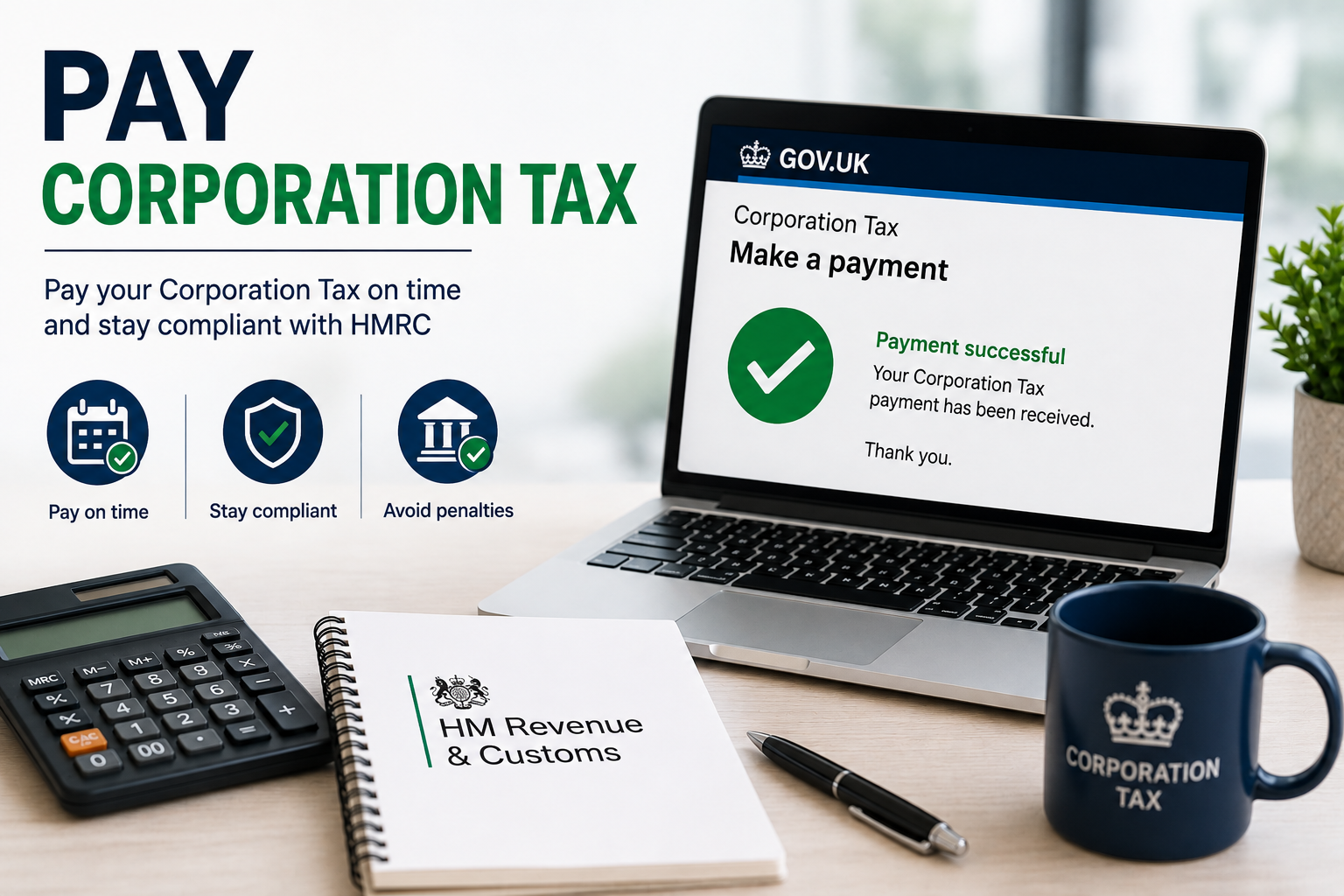
Yes. A UK limited company can pay its Corporation Tax directly from its business account. In most cases, using the company's own account is the clearest way to keep company tax payments separate from personal finances.
Corporation Tax is a liability of the limited company, so payments should be recorded correctly in the company's accounting records.
HMRC accepts several payment methods for Corporation Tax, depending on the circumstances. These can include:
When making the payment, it is important to use the correct Corporation Tax payment reference so HMRC can allocate the money to the correct company and accounting period.
Your Corporation Tax payment reference is normally a 17-character reference.
It usually includes the company's 10-digit Unique Taxpayer Reference (UTR), followed by additional characters identifying the relevant accounting period.
You can find the reference on HMRC correspondence or through the company's HMRC online account.
Using the wrong reference could result in the payment being allocated incorrectly.
Yes.
A UK company can pay Corporation Tax by bank transfer from its business account.
The company will need to use the appropriate HMRC bank details and its correct Corporation Tax payment reference.
Allow enough time for the payment to reach HMRC before the deadline, particularly when using a payment method that is not processed immediately.
Potentially, yes, provided the account supports payments to HMRC in the required way.
However, Corporation Tax is payable in pounds sterling (GBP).
If the company's funds are held in EUR, USD or another currency, they may need to be converted into GBP before the Corporation Tax payment is made.
Companies that receive international payments may therefore benefit from planning their currency conversion before the Corporation Tax deadline.
HMRC may receive a payment from an account that is not held in the company's name, provided the correct payment details and reference are used.
However, Corporation Tax is a company liability, not a personal tax liability.
If a director or shareholder pays Corporation Tax personally on behalf of the company, the transaction should be recorded correctly in the company's accounts. It may, for example, affect the director's loan account depending on the circumstances.
Using the company's business account generally makes record-keeping simpler.
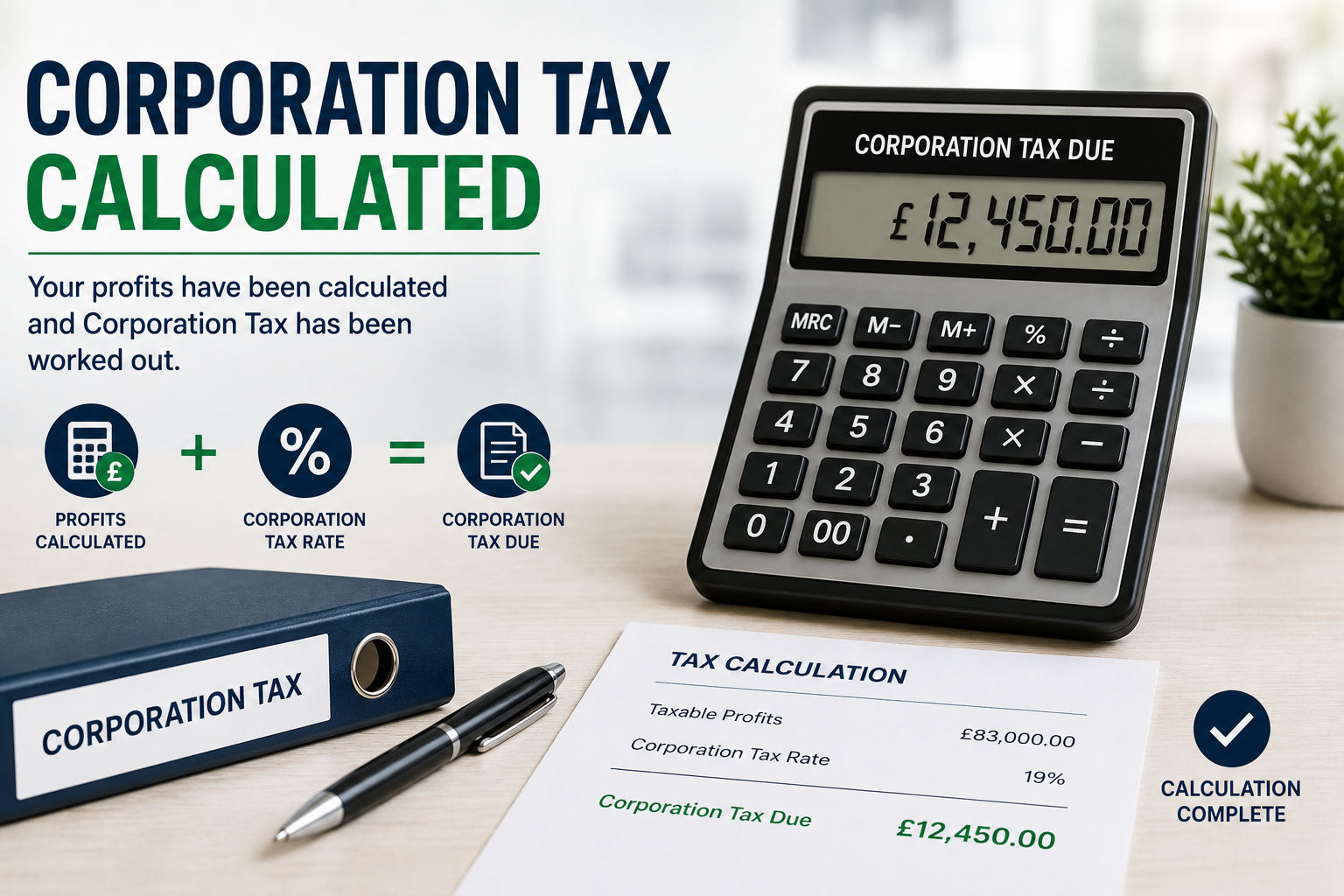
Corporation Tax is a company tax liability, but it is not normally an allowable business expense that reduces the taxable profit on which Corporation Tax itself is calculated.
In other words, a company cannot reduce its taxable profit simply by deducting its Corporation Tax payment as an ordinary business expense.
For most UK limited companies, Corporation Tax is normally due:
9 months and 1 day after the end of the company's accounting period.
For example, if the accounting period ends on 31 December, Corporation Tax would normally be due by 1 October of the following year.
Different rules can apply to larger companies that are required to make instalment payments.
It is not generally necessary to maintain a separate account solely for Corporation Tax.
However, some businesses choose to regularly set aside money for:
This can make it easier to manage cash flow and avoid spending money that will later be needed for tax payments.
Yes.
A company does not have to wait until the deadline to pay its Corporation Tax.
Making payments early or setting aside the expected liability throughout the year can help a business manage its cash flow.
If Corporation Tax is not paid by the applicable deadline, HMRC can charge late payment interest.
The interest can continue to accumulate until the outstanding Corporation Tax is paid.
This makes it important to allow enough time for payments from the company's business account to reach HMRC.
Yes. A UK limited company can pay Corporation Tax directly from its business account.
Yes. Bank transfer is one of the methods that can be used to pay HMRC, provided the correct HMRC details and Corporation Tax payment reference are used.
UK Corporation Tax is paid in pounds sterling (GBP).
Potentially, provided the account supports the required GBP payment to HMRC. Funds held in another currency may need to be converted into GBP.
A director can potentially fund a company tax payment personally, but the transaction should be recorded correctly in the company's accounting records.
Corporation Tax itself is not normally deductible when calculating the company's taxable profits.
Corporation Tax can be paid directly from a UK company's business account, and doing so can make it easier to maintain clear financial records.
Before making the payment, check the company's Corporation Tax payment reference, amount due and payment deadline.
For companies receiving income in multiple currencies, it is also important to ensure sufficient GBP is available before the tax deadline so that any necessary currency conversion does not delay the payment.