By

August 23, 2026
How Is Corporation Tax Calculated for a UK Company?
UK Corporation Tax is generally calculated on a company's taxable profits for its accounting period, rather than its total revenue or the amount of money in its business account.
The calculation starts with the company's income and gains, deducts allowable expenses and applicable tax reliefs, and then applies the relevant Corporation Tax rate.
A UK limited company may pay Corporation Tax on taxable profits arising from:
The important figure is taxable profit, not turnover.
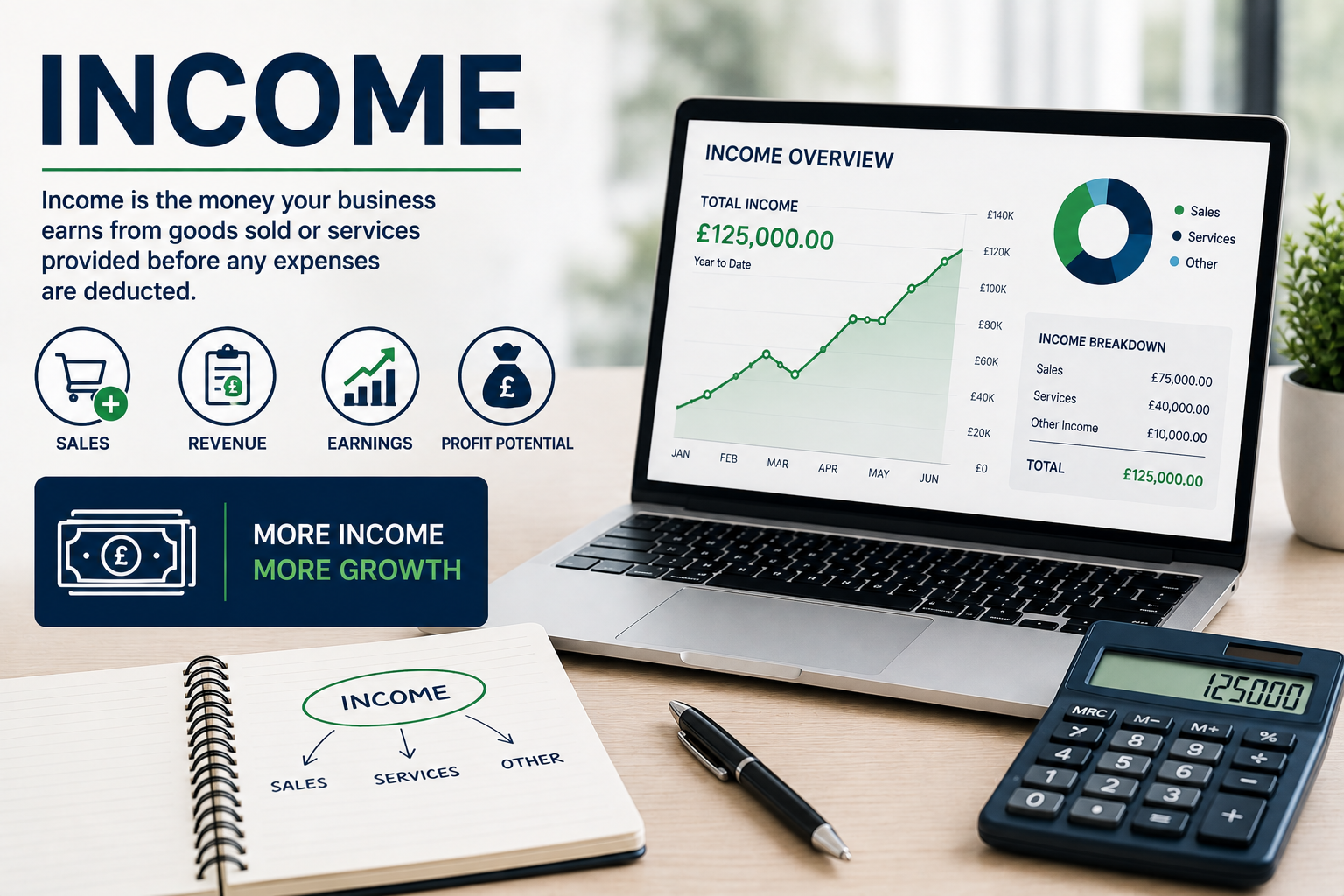
For example, if a company receives £150,000 in sales but has £100,000 of allowable costs, Corporation Tax is not simply calculated on the £150,000 of revenue.
A simplified calculation can look like this:
Business income – allowable expenses – applicable reliefs = taxable profit
The appropriate Corporation Tax rate is then applied to the taxable profit.
However, the accounting profit shown in a company's accounts and its taxable profit for Corporation Tax purposes can differ because tax rules treat some expenses, income and allowances differently.
For companies with a standard 12-month accounting period, the headline rules include:
These profit thresholds can be reduced where a company has associated companies or where the accounting period is shorter than 12 months.
Suppose a UK company has:
Revenue: £100,000
Allowable business expenses: £60,000
Taxable profit: £40,000
If the company qualifies for the 19% small profits rate:
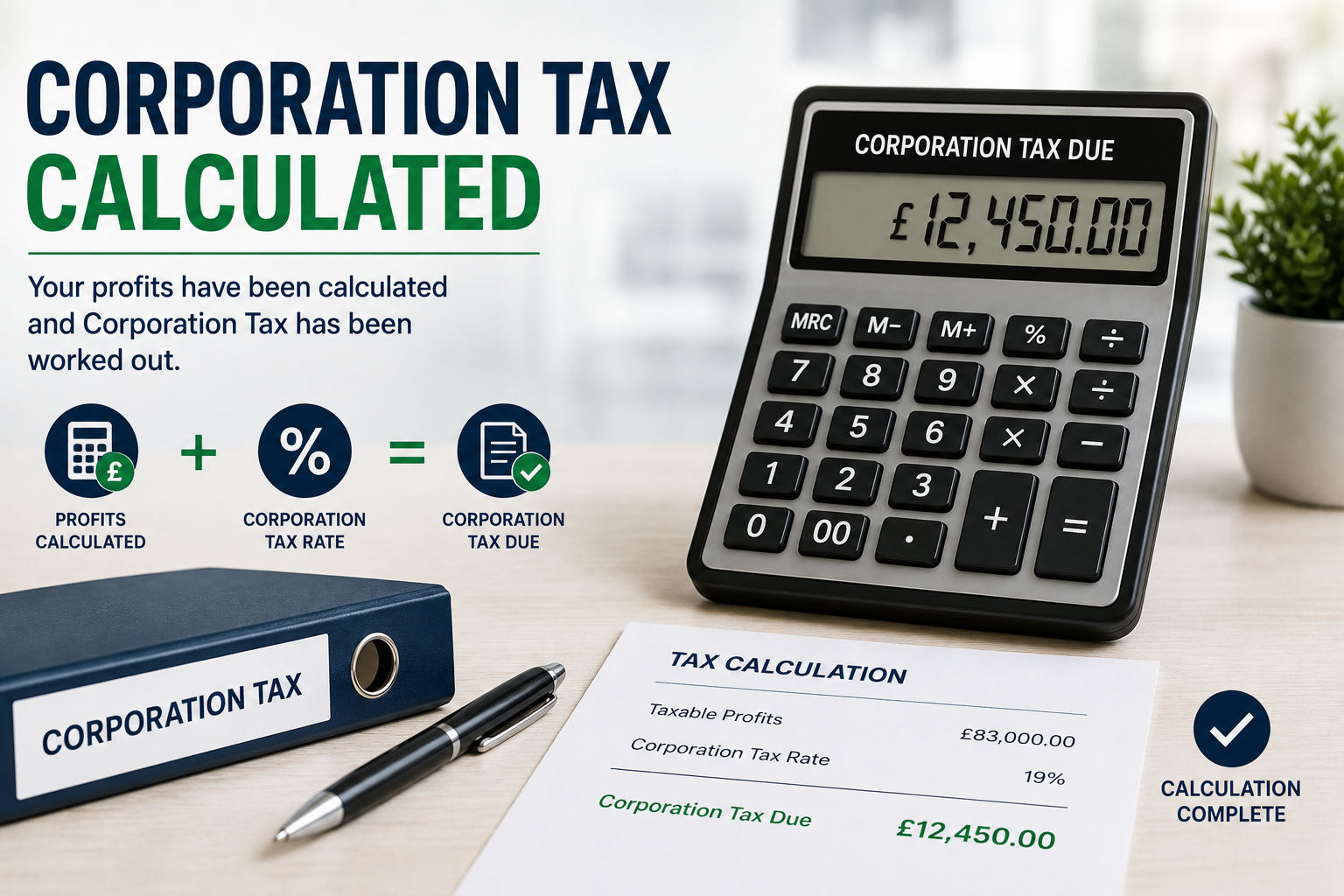
£40,000 × 19% = £7,600
The company's Corporation Tax would therefore be approximately £7,600, assuming there are no other adjustments, reliefs or taxable amounts.
Companies with profits between the lower and upper thresholds may qualify for Marginal Relief.
Marginal Relief gradually increases the effective Corporation Tax rate as profits rise.
This means Corporation Tax is not necessarily calculated by simply multiplying all profits by either 19% or 25%.
The exact calculation can also depend on factors such as dividend income from certain investments and the number of associated companies.
Businesses can generally deduct expenses that are allowable for Corporation Tax purposes.
Examples may include:
An expense appearing in the company's accounts does not automatically mean it is deductible for Corporation Tax.
Potentially.
Purchases such as machinery, computers and other business equipment may qualify for capital allowances rather than being treated in the same way as ordinary day-to-day expenses.
Available allowances can reduce the company's taxable profits, subject to the applicable rules and eligibility requirements.
Generally, no.
Dividends paid to shareholders are distributions of company profits rather than ordinary business expenses.
A company therefore cannot normally reduce its taxable profit simply by paying more dividends to its shareholders.
A director's salary can generally be treated as a business expense where it is incurred wholly and exclusively for the purposes of the company's trade and meets the relevant tax rules.
However, salaries can also create PAYE and National Insurance obligations.
Salary and dividends therefore have different tax treatments.
Corporation Tax is based on taxable profits, not on whether those profits are withdrawn from the company's bank account.
Leaving profits inside the company does not normally remove the Corporation Tax liability.
For example, a company could make £50,000 of taxable profit and leave all of the money in its business account. Corporation Tax could still be due on that profit.
If allowable expenses and other deductions exceed taxable income, the company may make a tax loss.
Depending on the circumstances, losses may be available to:
Specific conditions and restrictions can apply.
For most UK companies, Corporation Tax is normally due 9 months and 1 day after the end of the accounting period.
The Company Tax Return is generally due 12 months after the end of the accounting period.
Larger companies may be required to make Corporation Tax payments by instalments.
Corporation Tax is generally calculated on taxable profits, not total turnover.
The main Corporation Tax rate is 25%. A 19% small profits rate can apply to qualifying companies with profits of £50,000 or less, while Marginal Relief can apply between the relevant thresholds.
If the full £50,000 represents taxable profits and the company qualifies for the small profits rate, a simple 19% calculation would produce Corporation Tax of £9,500.
Yes. Expenses that are deductible for Corporation Tax purposes can reduce taxable profits and therefore reduce the Corporation Tax bill.
Generally, no. Dividends are paid from company profits and are not normally deductible when calculating taxable profits.
If the company has no taxable profits, it will generally have no Corporation Tax to pay for that accounting period, although it may still have reporting obligations.
Corporation Tax for a UK company is broadly calculated by determining the company's taxable profits and applying the appropriate Corporation Tax rate.
For a simple business, the basic principle is:
Income – allowable expenses and applicable reliefs = taxable profit
However, capital allowances, losses, associated companies, Marginal Relief and other tax adjustments can make the final calculation more complicated.
Companies should therefore maintain accurate financial records throughout the accounting period so that taxable profits and the resulting Corporation Tax liability can be calculated correctly.